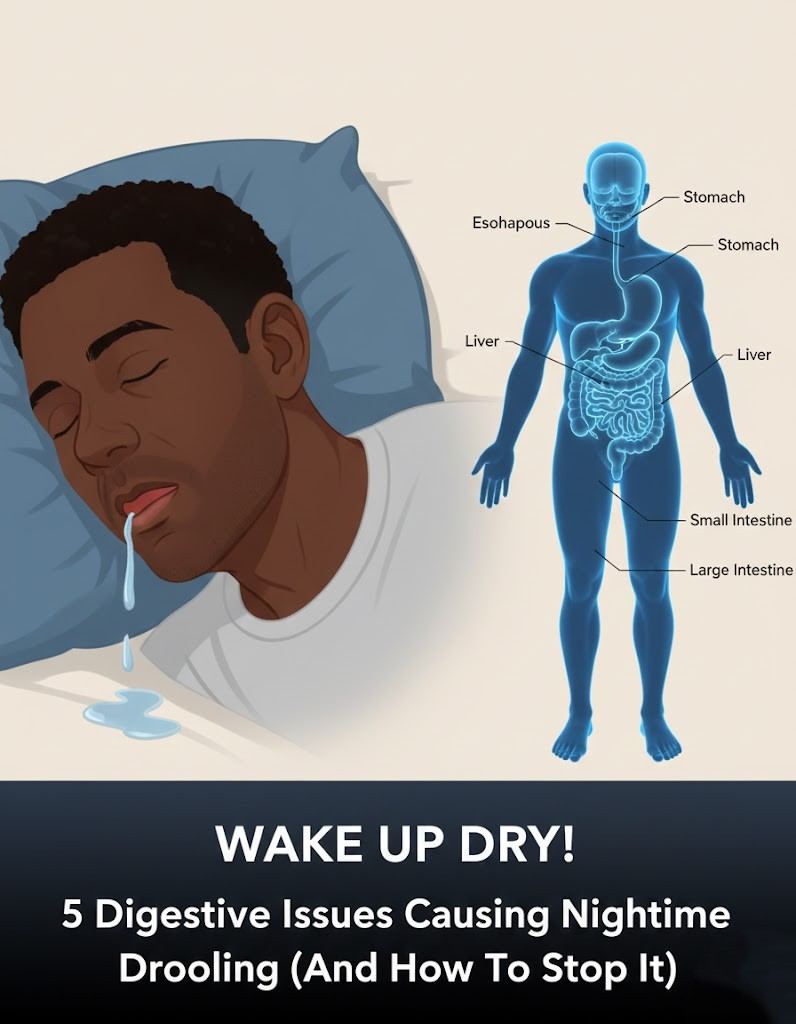
Alright, let’s tackle this carefully. Mouth drooling—or excessive saliva during sleep (sialorrhea)—is usually harmless, but if it’s persistent or sudden, it can be a sign of underlying health issues. Here’s a breakdown of what doctors often warn about:
Why You Might Drool at Night
- Sleeping position (on your side or stomach)
- Nasal congestion or allergies
- Acid reflux (GERD)
- Dental issues (missing teeth, poorly fitting dentures)
- Medications that increase saliva production
While occasional drooling is normal, chronic or severe drooling can point to more serious conditions.
6 Health Conditions That Can Be Linked to Excessive Drooling
1. Neurological Disorders
- Examples: Parkinson’s disease, ALS, stroke, cerebral palsy
- Why it happens: Weak facial or swallowing muscles cause saliva to pool instead of being swallowed.
- Warning signs: Drooling along with tremors, stiffness, or difficulty swallowing.
2. Sleep Apnea
- Why it happens: Obstruction of the airway leads to mouth breathing, which can increase saliva accumulation.
- Other symptoms: Loud snoring, daytime fatigue, gasping during sleep.
3. GERD / Acid Reflux
- Why it happens: Acid in the esophagus can stimulate extra saliva production to protect the throat.
- Other symptoms: Heartburn, sour taste, chronic cough.
4. Allergies or Sinus Problems
- Why it happens: Nasal blockage forces mouth breathing, which can lead to drooling.
- Other symptoms: Congestion, sinus pressure, postnasal drip.
5. Medication Side Effects
- Examples: Certain antipsychotics, epilepsy medications, or medications that affect saliva production.
- Other symptoms: Swelling, dry mouth at other times, or drowsiness.
6. Dental or Oral Issues
- Examples: Misaligned teeth, poorly fitting dentures, or oral infections.
- Why it happens: Difficulty swallowing or closing the mouth properly leads to drooling.
When to See a Doctor
- Sudden onset of drooling without a clear cause
- Drooling accompanied by speech problems, facial weakness, or swallowing difficulties
- Nighttime drooling causing choking, coughing, or sleep disruption
- Persistent drooling that doesn’t improve with simple lifestyle changes
Tips to Reduce Nighttime Drooling
- Sleep on your back with your head slightly elevated
- Treat allergies or sinus issues
- Check for GERD symptoms and talk to your doctor
- Practice oral motor exercises if muscle weakness is suspected
Bottom line: Occasional drooling is usually harmless, but persistent or severe drooling can be a warning sign of neurological, digestive, respiratory, or oral health issues. Paying attention to additional symptoms is key.
I can also make a practical “Drooling & Health Checklist” that helps you identify whether your drooling is harmless or a signal to see a doctor, including tips for nighttime management.
Do you want me to make that checklist?
