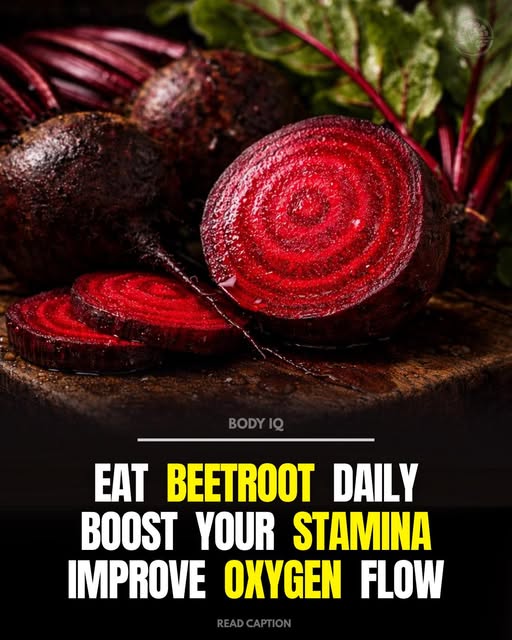
That headline is mostly marketing-style exaggeration, but it’s based on a real scientific effect.
What’s actually true about beetroot 🥬
Beetroot contains natural compounds called dietary nitrates, which the body converts into nitric oxide. Nitric oxide helps:
- Relax blood vessels
- Improve blood flow
- Slightly reduce blood pressure in some people
- Improve oxygen efficiency during exercise
So yes—there is real evidence behind it.
What beetroot can realistically do
✔ May help with:
- Slight improvement in exercise endurance
- Mild reduction in blood pressure
- Better blood circulation
- Improved oxygen use in muscles (especially in athletes)
Some studies show small performance benefits in running or cycling.
What it does NOT do (important)
Beetroot does NOT:
- “Supercharge” stamina instantly
- Replace heart or blood pressure medications
- Cure circulation problems or disease
- Work like a miracle daily fix
Simple way people use it
- Beetroot juice (small glass)
- Boiled or raw beetroot in salads
- Powder added to smoothies
Effects, if any, are gradual and mild, not dramatic.
Who should be careful
- People with kidney stones risk (beetroot is high in oxalates)
- Those with low blood pressure
- People on blood pressure medications (may enhance effects)
Bottom line
Beetroot is a healthy food with modest science-backed benefits for blood flow and exercise performance, but it is not a powerful “daily habit cure” as headlines suggest.
If you want, I can compare beetroot with other natural foods that actually support circulation (like garlic, pomegranate, or leafy greens) in a realistic way.
