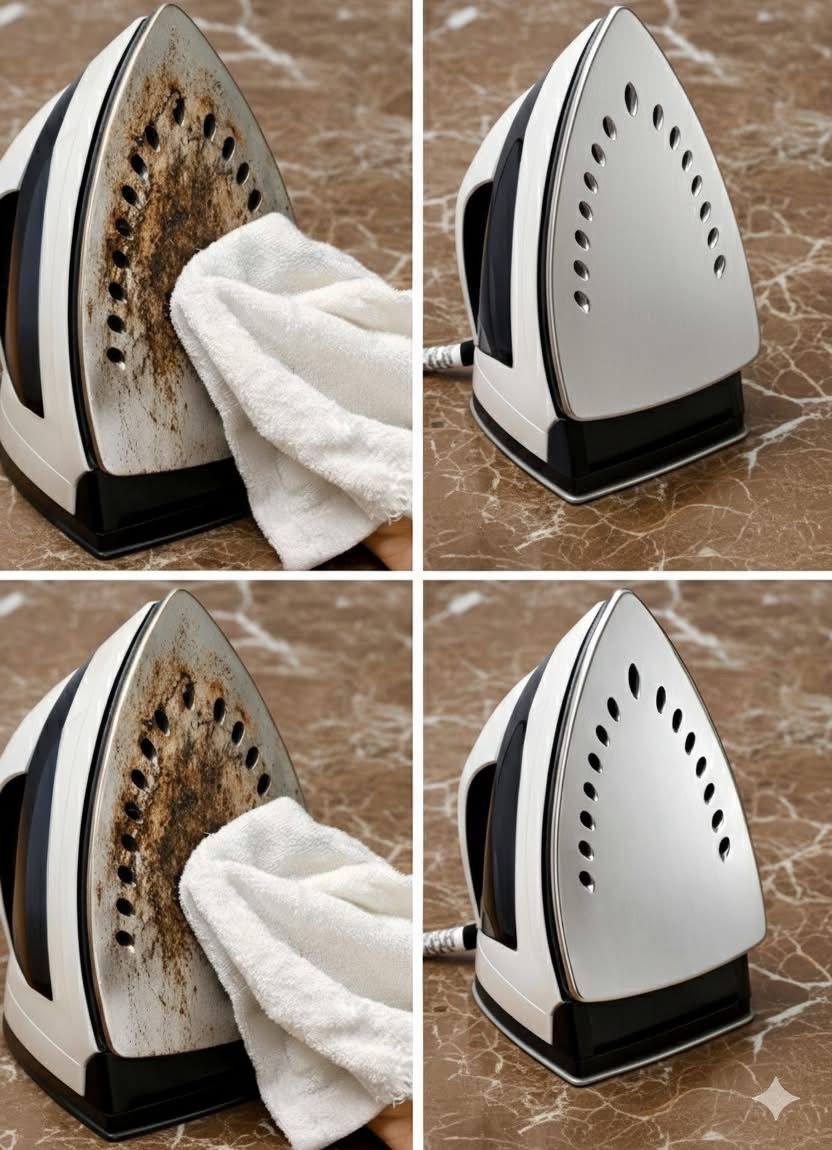
That’s a popular “viral cleaning hack,” and it’s partly true—but with important safety limits.
🧼 Cleaning an iron with salt (what it actually does)
Salt can help remove burnt fabric residue and light buildup from the soleplate of an iron by acting as a gentle abrasive.
⚠️ First: Only use this for certain irons
- ✔️ Works for metal soleplates (stainless steel, uncoated aluminum)
- ❌ Do NOT use on non-stick, ceramic, or coated soleplates (it can scratch them)
🧂 Safe method (step-by-step)
- Turn on the iron (low to medium heat, no steam)
- Place a clean cotton cloth or paper on a flat surface
- Sprinkle 1–2 tablespoons of salt on it
- Gently rub the warm iron over the salt
- Burnt residue will transfer onto the salt
- Turn off iron and let it cool
- Wipe with a damp cloth to remove remaining salt
🧠 Why it works
Sodium chloride (salt) is mildly abrasive, so it helps:
- Scrape off burnt particles
- Lift sticky residue
- Clean without harsh chemicals
🚫 What NOT to do
- Don’t use excessive pressure (can damage soleplate)
- Don’t use on steam holes aggressively
- Don’t inhale fumes if iron is too hot
- Don’t substitute with coarse salt on delicate coatings
✨ Better alternatives (for heavy buildup)
- Baking soda paste + soft cloth
- Vinegar wipe (for mineral deposits)
- Commercial iron cleaner sticks
🧾 Bottom line
Salt can make an iron “spotless” only for light surface burns, but it’s not a universal deep cleaner—and it must be used carefully depending on the iron type.
If you want, I can show you a foolproof 5-minute method to clean steam holes and remove stubborn scorch marks safely.
