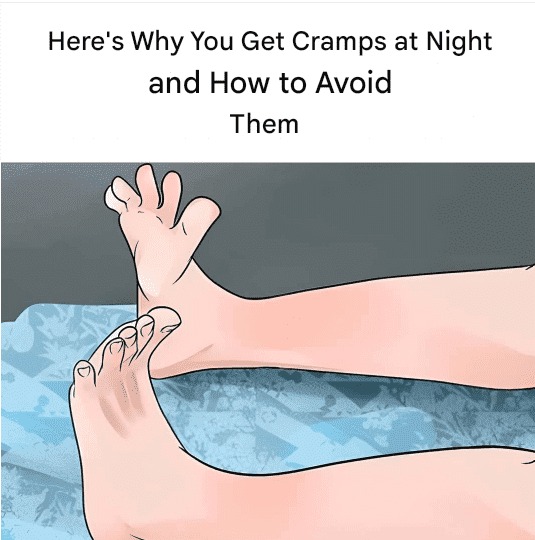
Night cramps—especially in the legs or feet—are very common and can feel sudden and intense. They usually happen because of a mix of muscle fatigue, circulation, and body chemistry. Here’s a clear breakdown of why they occur:
🌙 1. Muscle Fatigue
- Overusing muscles during the day (walking, standing, exercise) can lead to tight, overworked muscles.
- When you finally rest, the muscle can spasm involuntarily, causing a cramp.
💧 2. Dehydration
- Low fluid levels can disrupt the balance of electrolytes (like sodium and potassium).
- This makes muscles more prone to sudden contractions at night.
⚡ 3. Mineral Imbalance
- Lack of key minerals such as:
- Magnesium
- Potassium
- Calcium
can interfere with normal muscle function and trigger cramps.
🪑 4. Poor Circulation or Position
- Sleeping in certain positions (like pointed toes or bent legs) can shorten muscles and restrict blood flow.
- This increases the chance of cramping during the night.
🧠 5. Nerve Issues
- Sometimes cramps are linked to nerve compression in the spine or legs, especially as we age.
❤️ 6. Underlying Conditions
Frequent cramps may be related to:
- Diabetes
- Peripheral artery disease
- Kidney disease
🛌 How to Prevent Night Cramps
✔️ Before Bed:
- Stretch your calves and feet for a few minutes
- Stay well hydrated
- Avoid heavy exercise right before sleep
✔️ Daily Habits:
- Eat foods rich in magnesium and potassium (bananas, leafy greens)
- Wear supportive footwear
- Move regularly if you sit or stand for long periods
🚨 When to See a Doctor
- Cramps happen very frequently or severely
- They’re accompanied by swelling, weakness, or numbness
- They disrupt sleep consistently
💡 Key Insight: Night cramps are usually harmless but preventable, often caused by dehydration, fatigue, or mineral imbalance—but persistent cases may signal something deeper.
If you want, I can give you a simple 2-minute stretch routine that stops cramps almost instantly when they happen.
