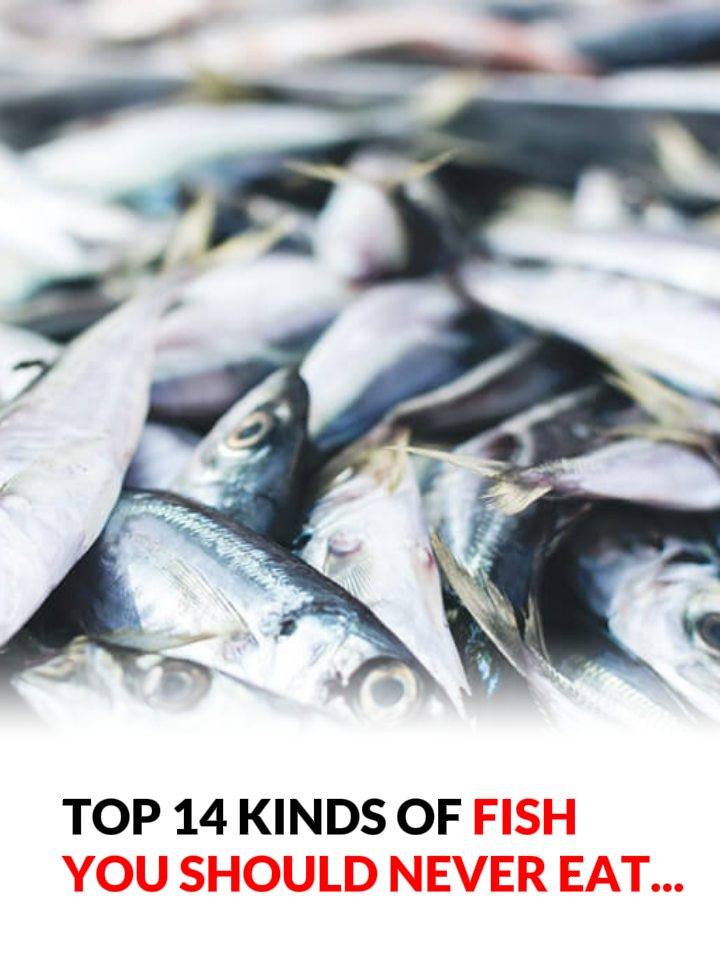
Here’s the real health alert you should know before eating certain fish — and why some types deserve extra caution or avoidance altogether. This isn’t clickbait — it’s based on reputable health agency guidelines.(U.S. Food and Drug Administration)
🛑 Why This Warning Matters
Most fish contain trace mercury, but some species — especially large, long‑lived predators — accumulate much higher levels. Mercury doesn’t leave your body easily, and over time it can build up and harm the nervous system, heart, and hormones. This is especially risky for children, pregnant women, and people who eat a lot of fish.(Healthline)
🚨 Fish You Should Never Eat Regularly (Avoid or Limit Greatly)
These are the species with highest mercury levels, and health agencies advise limiting or avoiding them:
❌ High‑Mercury Fish to Avoid
- Shark — very high mercury
- Swordfish — very high mercury
- King mackerel — very high mercury
- Tilefish from Gulf of Mexico — very high mercury
- Marlin — high mercury
- Bigeye tuna (fresh/tuna steak) — high mercury
These are grouped by the FDA/EPA as the “highest levels of mercury,” and should be avoided, especially by kids, pregnant women, and frequent fish eaters.(U.S. Food and Drug Administration)
📊 Why Mercury Is Dangerous
- Mercury turns into methylmercury in water — a toxic form that bioaccumulates in fish as they eat smaller fish.(Healthline)
- In humans, high exposure over time can affect:
- Brain and nervous system function
- Heart health and blood pressure
- Fetal development during pregnancy
- Mercury doesn’t wash out with cooking — it stays in the muscle tissue.(US EPA)
🧠 Who Should Be Most Careful
These groups are advised to be especially cautious about high‑mercury fish:
- Pregnant or breastfeeding women
- Children (especially under age 11)
- People who eat fish very frequently
- Older adults or those with weakened detox systems
Because mercury can harm nervous system and development at high exposures.(US EPA)
✅ Better Alternatives (Safe, Low‑Mercury Choices)
Instead of high‑mercury fish, experts recommend varieties that are lower in mercury and still nutritious:
👍 Safe or lower‑mercury fish
- Salmon
- Pollock
- Sardine
- Shrimp
- Trout
- Cod
- Tilapia
These are listed as “best choices” by the FDA/EPA due to much lower mercury levels.(U.S. Food and Drug Administration)
🧠 Bottom Line
✔️ Fish can be very healthy — rich in protein and omega‑3 fats.(U.S. Food and Drug Administration)
❗ But some species concentrate mercury at levels that may harm your health over time, especially with frequent consumption.
❌ Avoid or greatly limit shark, swordfish, king mackerel, tilefish, marlin, and bigeye tuna.(U.S. Food and Drug Administration)
If you want, I can give you a simple weekly fish consumption chart showing how often and how much you should eat each type safely based on your age and health goals.
