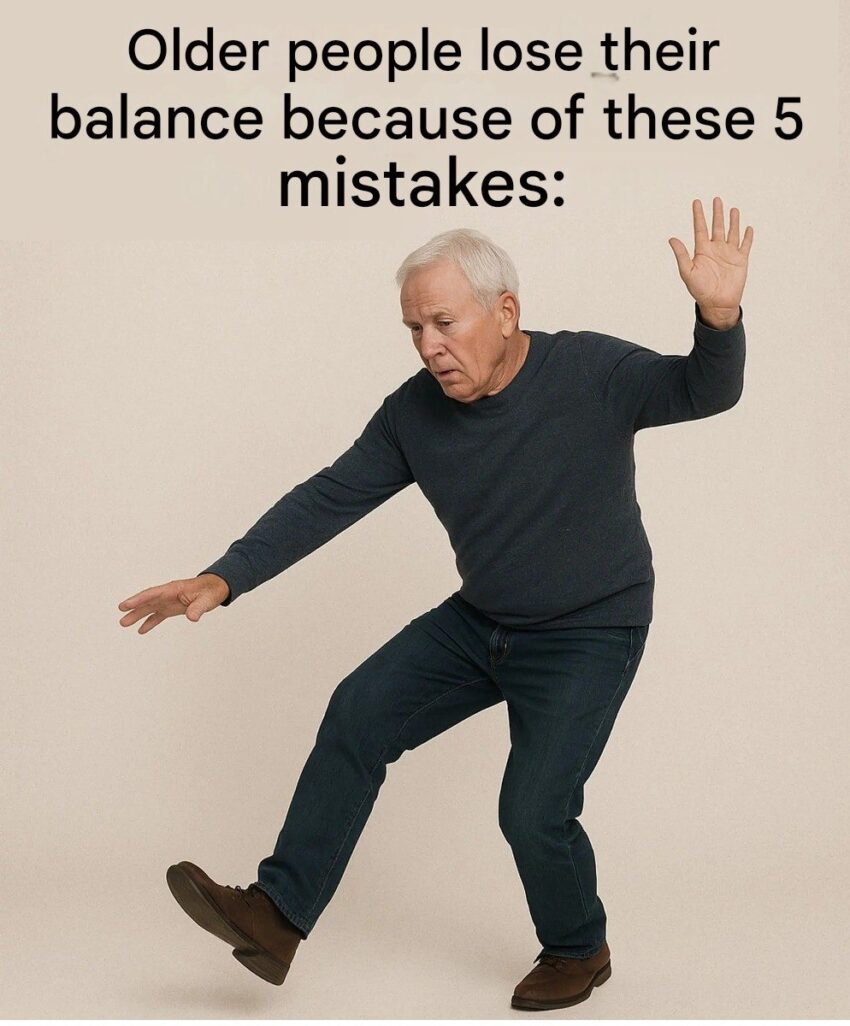
Losing balance with age is common—but it’s often not just “getting older.” In many cases, specific habits or overlooked issues are the real cause. Here are 5 common mistakes that can lead to balance problems in older adults:
1. Ignoring Muscle Loss (Especially in the Legs)
As people age, they naturally lose muscle (a process called Sarcopenia).
If they don’t stay active, leg strength and stability decline—making falls much more likely.
Fix:
Simple strength exercises like:
- Sit-to-stands
- Walking
- Light resistance training
2. Not Training Balance Directly
Many people walk regularly but never challenge their balance system.
Balance depends on coordination between the inner ear (Vestibular system), vision, and muscles.
Fix:
- Standing on one leg
- Heel-to-toe walking
- Tai chi or gentle yoga
3. Wearing the Wrong Footwear
Loose slippers, worn-out shoes, or smooth soles reduce grip and stability.
Fix:
- Use well-fitted shoes with non-slip soles
- Avoid walking in socks on smooth floors
4. Not Checking Vision and Hearing
Vision plays a huge role in balance. Conditions like Cataracts or poor depth perception increase fall risk.
Hearing issues can also affect spatial awareness.
Fix:
- Regular eye exams
- Update glasses when needed
5. Ignoring Medication Side Effects
Some medications can cause dizziness, drowsiness, or drops in blood pressure—leading to instability.
This is especially true for:
- Blood pressure meds
- Sedatives
- Some antidepressants
Fix:
- Review medications with a doctor
- Report dizziness or lightheadedness early
⚠️ Bonus Factor: Fear of Falling
Ironically, being afraid of falling can make balance worse. It causes stiffness and reduced movement, increasing risk over time.
✅ Bottom Line
Most balance problems are preventable or reversible with:
- Strength + balance training
- Proper footwear
- Regular health checkups
If you want, I can suggest a simple 5-minute daily balance routine specifically for older adults.
