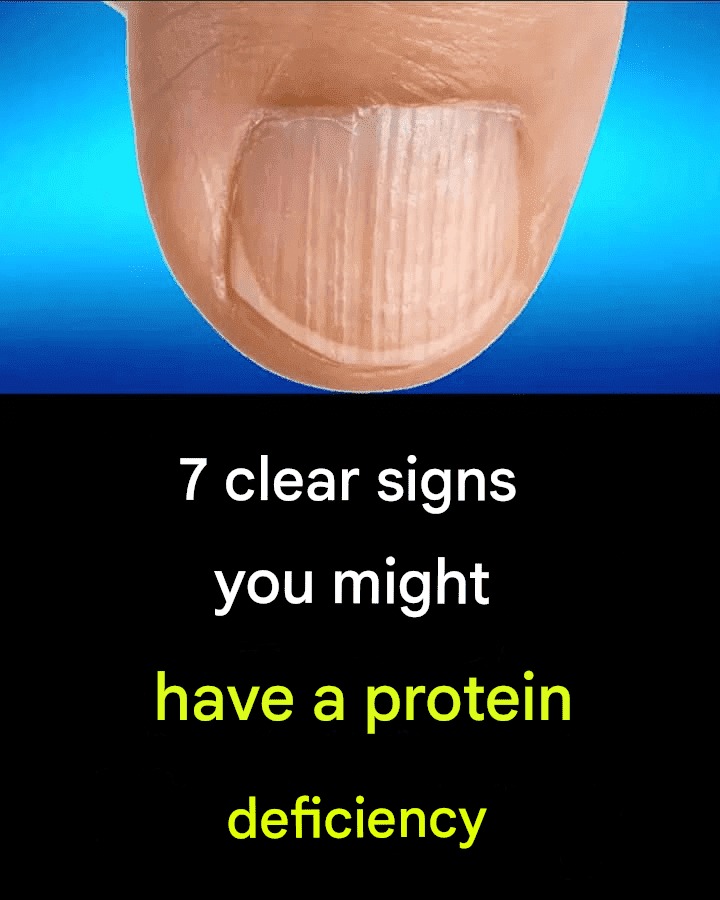
That headline isn’t totally wrong—but it’s often exaggerated. True protein deficiency is uncommon if you’re eating a varied diet. Still, there are real signs your body might not be getting enough protein.
🧠 Why protein matters
Protein supports:
- Muscle maintenance
- Hormones and enzymes
- Skin, hair, and immune function
⚠️ Possible signs of low protein intake
1. Muscle loss or weakness
- Losing strength or size without trying
- Feeling physically weaker than usual
2. Constant hunger
- Protein helps you feel full
- Low intake → you feel hungry more often
3. Hair thinning or hair loss
- Hair is made largely of protein
- Deficiency can affect growth
4. Brittle nails
- Nails may become weak, peel, or break easily
5. Swelling (edema)
- Especially in feet or legs
- Seen in more severe cases (linked to Protein Deficiency Edema)
6. Slow wound healing
- Protein is needed for tissue repair
7. Frequent infections
- Low protein can weaken immunity
⚠️ Severe deficiency (rare but serious)
A true condition like Kwashiorkor can cause:
- Swollen belly
- Skin and hair changes
- Growth problems (mostly in children)
🚫 What viral posts get wrong
❌ “If you feel tired, you lack protein”
❌ “Everyone is protein deficient”
❌ “You need very high protein for health”
👉 These are oversimplified.
🧾 Bottom line
A few of these signs together might suggest low protein—but they’re not specific, and many other conditions can cause them too.
If you want, tell me what you typically eat in a day—I can estimate whether you’re actually getting enough protein.
