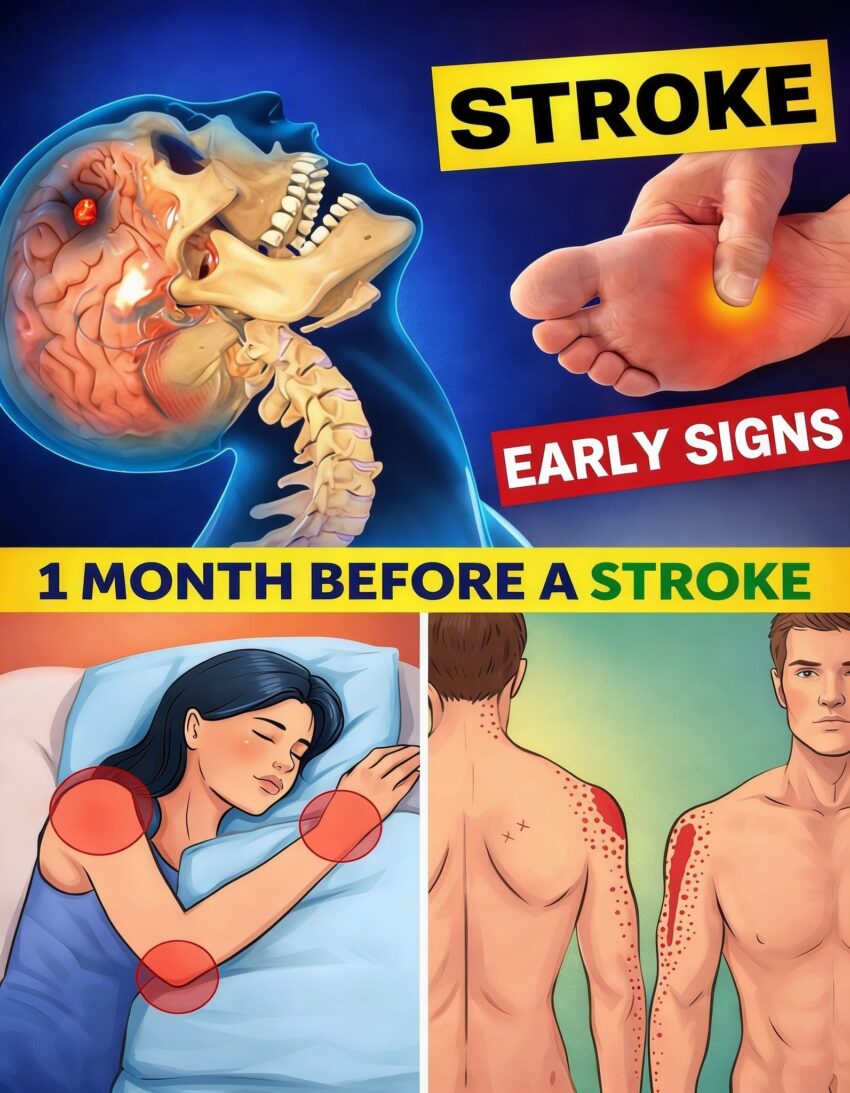
Some articles make stroke sound predictable weeks in advance—but that’s misleading. A stroke usually happens suddenly. However, there are warning signs (especially mini-strokes) that can occur days or weeks before a major event. These are called transient ischemic attack and should never be ignored.
⚠️ Possible Warning Signs Before a Stroke
These may appear suddenly and then disappear:
- Sudden numbness or weakness
Especially on one side of the face, arm, or leg. - Confusion or trouble speaking
Slurred speech or difficulty understanding others. - Vision problems
Blurred or lost vision in one or both eyes. - Dizziness or loss of balance
Trouble walking, coordination issues. - Severe headache with no clear cause
More common in bleeding-type strokes. - Sudden fatigue or unusual weakness
Particularly if unexplained. - Difficulty swallowing
- Brief episodes of symptoms that resolve
These are classic signs of a mini-stroke (TIA).
👉 A quick way to remember urgent symptoms is FAST:
- Face drooping
- Arm weakness
- Speech difficulty
- Time to call emergency services
🛡️ 9 Tips to Help Prevent Stroke
You can’t eliminate risk completely, but you can lower it significantly:
- Control blood pressure
High blood pressure is the biggest risk factor. - Manage blood sugar
Especially important if you have diabetes. - Lower cholesterol levels
- Quit smoking
Smoking damages blood vessels and raises clot risk. - Exercise regularly
Even 30 minutes of walking most days helps. - Eat a heart-healthy diet
Focus on fruits, vegetables, whole grains, and less salt. - Maintain a healthy weight
- Limit alcohol intake
- Take prescribed medications properly
For conditions like high blood pressure, heart disease, or atrial fibrillation.
🚨 When to Seek Immediate Help
If you or someone else shows any FAST symptoms, treat it as an emergency—even if they go away. Early treatment can prevent permanent damage or death.
If you want, I can tailor these tips based on your age, health conditions, or medications to make them more practical for you.
