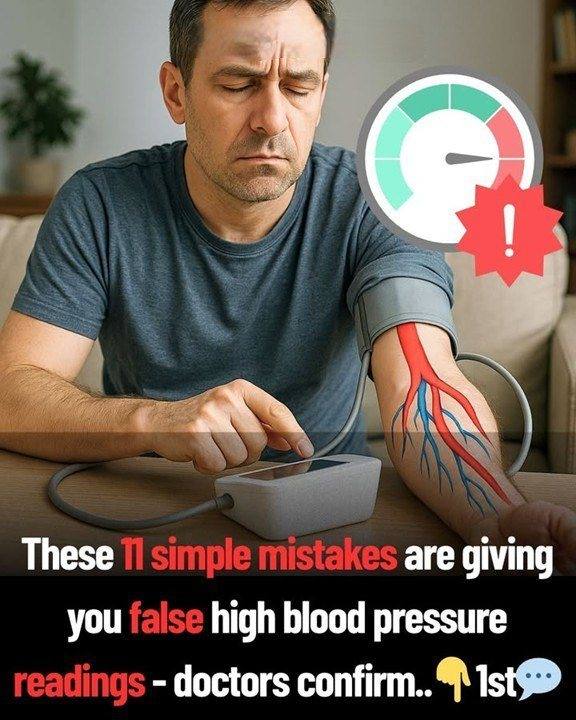
Getting a high reading doesn’t always mean you truly have hypertension. Many everyday mistakes can temporarily raise your numbers and lead to a false alarm when measuring for high blood pressure.
Here are 11 common mistakes doctors warn about:
⚠️ 1. Talking during the measurement
Even a short conversation can raise your reading by 10–15 mmHg.
☕ 2. Drinking caffeine beforehand
Coffee, tea, or energy drinks can spike blood pressure for 30–60 minutes.
🚬 3. Smoking right before measuring
Nicotine temporarily constricts blood vessels and increases readings.
🪑 4. Sitting incorrectly
- No back support
- Feet dangling or crossed
These can falsely elevate numbers.
💪 5. Arm not at heart level
If your arm is too low → reading appears higher
Too high → reading appears lower
👕 6. Measuring over clothing
Sleeves (especially tight ones) can interfere with cuff pressure.
😰 7. Being stressed or anxious
This is called
white coat hypertension
Even at home, stress can raise readings.
🏃 8. Measuring right after activity
Exercise, walking, or even climbing stairs can elevate BP temporarily.
🍽️ 9. Measuring right after eating
Digestion affects circulation and can skew results.
⏱️ 10. Not resting beforehand
You should sit quietly for at least 5 minutes before measuring.
📏 11. Using the wrong cuff size
A cuff that’s too small = falsely high reading
Too large = falsely low reading
✅ How to get an accurate reading
- Sit calmly for 5 minutes
- Keep feet flat and back supported
- Place arm at heart level
- Avoid caffeine, smoking, or exercise 30 minutes before
- Take 2–3 readings and average them
🧠 Bottom line
One high reading doesn’t automatically mean you have hypertension. Proper technique matters a lot—and small mistakes can make a big difference.
If you want, I can show you the exact step-by-step method doctors use at home to get the most reliable blood pressure readings.
