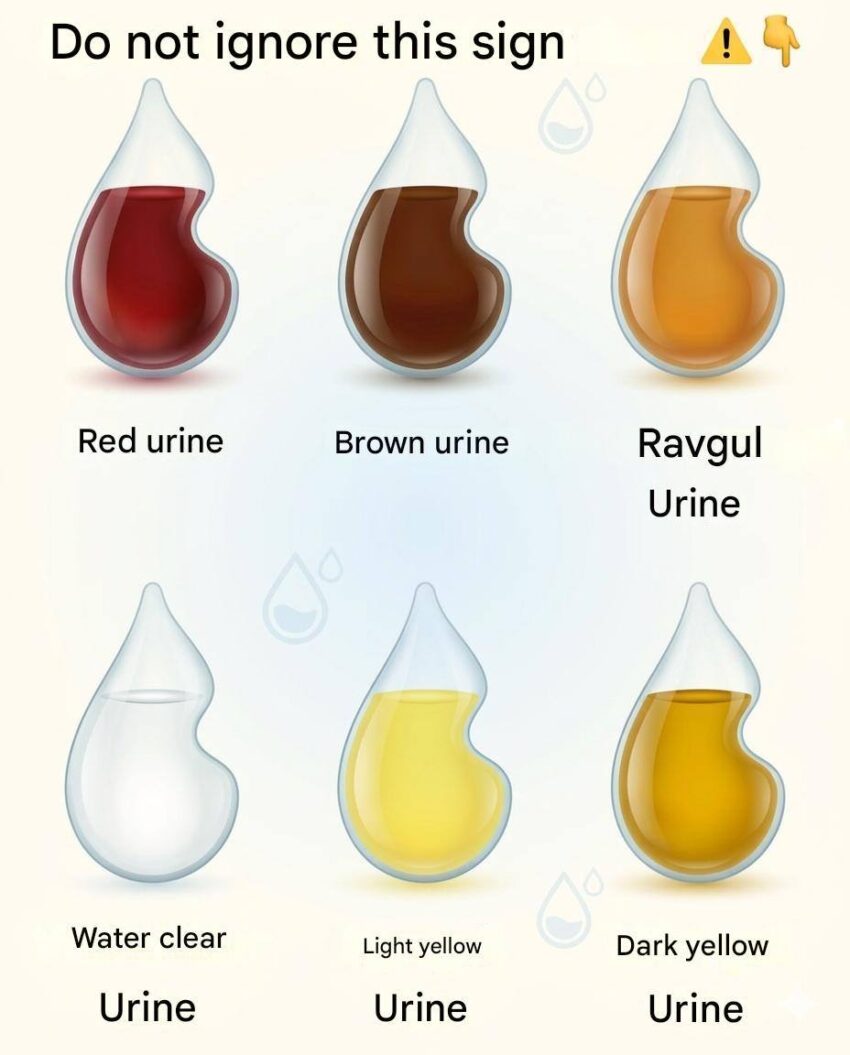
Urine color can give useful clues about hydration and, sometimes, health—but it’s not a diagnosis on its own. Here’s a clear guide to what different colors usually mean 👇
💧 Pale yellow to light straw
Normal and healthy
- Well hydrated
- This is the ideal range
🚰 Clear (almost colorless)
- Very hydrated (maybe over-hydrated)
- Usually not harmful, but constant overhydration isn’t necessary
🟡 Dark yellow
- Mild dehydration
👉 Drink more fluids
🟠 Amber or honey
- Dehydration or concentrated urine
- Can also be linked to liver or bile issues in some cases
👉 Watch for other symptoms like fatigue or yellowing of eyes
🍊 Orange
- Sometimes from medications or vitamins
- Can be associated with Liver disease or bile problems
🔴 Pink or red
- Could be from foods (beets, berries)
- Or blood in urine
👉 May relate to Hematuria — should be checked if unexplained
🟤 Brown (tea or cola-colored)
- Possible liver issues or severe dehydration
- Sometimes muscle breakdown
🟢 Blue or green
- Rare
- Often due to medications, dyes, or certain infections
⚪ Cloudy or milky
- May indicate infection or crystals
👉 Could be linked to Urinary tract infection
🚨 When to see a doctor
- Red or brown urine without a clear cause
- Persistent dark urine
- Pain, fever, or burning with urination
- Sudden changes that don’t go away
🧠 Reality check
- Hydration is the biggest factor affecting urine color
- Temporary changes are common and often harmless
- Persistent or unusual colors deserve attention
✔️ Bottom line
Aim for pale yellow urine. Anything consistently darker or unusual should be checked—especially if you have other symptoms.
If you want, describe your urine color and any symptoms—I can help you interpret it more precisely.
