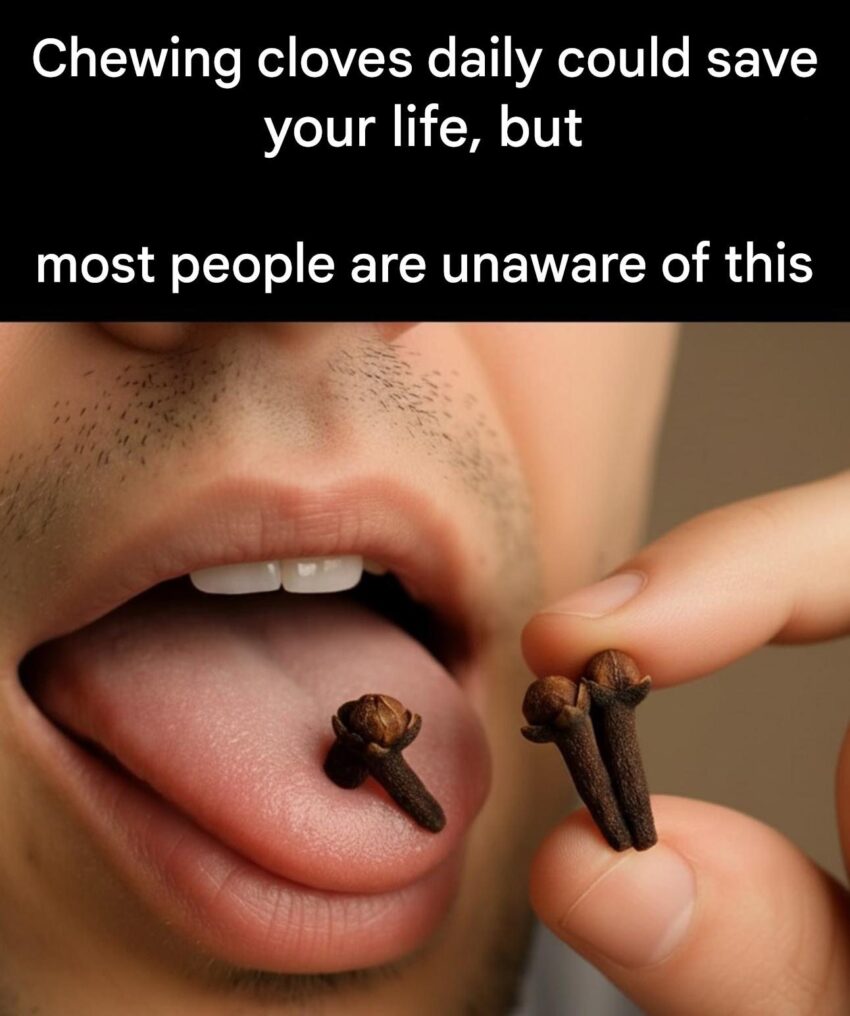
That claim is overhyped. Chewing cloves can be beneficial—but it won’t “save your life,” and it’s not a substitute for proper medical care.
Here’s what’s actually true about cloves 👇
🌿 What cloves really contain
Cloves are rich in eugenol, a compound with:
- Antioxidant properties
- Mild anti-inflammatory effects
- Antimicrobial activity
✅ Possible benefits of chewing cloves
1. Oral health support
- Helps reduce bacteria in the mouth
- Can temporarily relieve bad breath and mild tooth discomfort
2. Digestive aid
- May help reduce bloating and gas
- Stimulates digestive enzymes
3. Blood sugar support (limited evidence)
- Some studies suggest cloves may help improve insulin sensitivity
- Could support people managing diabetes (as part of a broader plan)
4. Anti-inflammatory effects
- May help reduce minor inflammation in the body
⚠️ Important warnings
- Not a cure for serious diseases (heart disease, cancer, diabetes, etc.)
- Too many cloves can cause:
- Mouth irritation
- Digestive discomfort
- Liver issues (in large amounts due to eugenol)
- Can interact with medications (especially blood thinners)
🧠 Bottom line
Chewing 1–2 cloves a day can be a small, supportive habit for digestion and oral health—but it’s not life-saving on its own.
If you want, I can show you a safe daily routine using cloves + other natural habits that actually do make a noticeable difference in long-term health.
