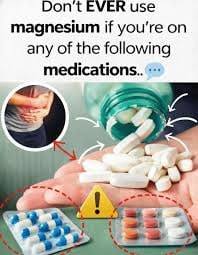
That headline is a serious warning about magnesium supplements and drug interactions. Magnesium is generally safe, but it can interfere with the absorption or effectiveness of certain medications. Here’s a careful breakdown:
💊 Medications That Can Interact With Magnesium
1. Antibiotics
- Tetracyclines (e.g., doxycycline, tetracycline)
- Fluoroquinolones (e.g., ciprofloxacin, levofloxacin)
- Magnesium can bind to these drugs in the stomach, reducing absorption and effectiveness.
- ⚠️ Recommendation: Take antibiotics 2–4 hours before or after magnesium.
2. Blood Pressure / Heart Medications
- Calcium channel blockers (e.g., amlodipine, nifedipine)
- Digoxin (for heart failure)
- High magnesium can alter heart rhythm or lower blood pressure too much, especially in patients with kidney issues.
3. Diabetes Medications
- Metformin or insulin
- Magnesium may affect blood sugar regulation, potentially causing interactions or unexpected glucose changes.
4. Osteoporosis Medications
- Bisphosphonates (e.g., alendronate)
- Magnesium can reduce absorption, so these should be taken at least 30–60 minutes apart.
5. Muscle Relaxants / Sedatives
- High magnesium may enhance sedative or muscle relaxant effects, causing excessive drowsiness or weakness.
⚠️ Key Safety Tips
- Check your prescriptions: Always tell your doctor if you’re taking magnesium supplements.
- Timing matters: Often spacing magnesium and other medications by 2–4 hours is enough.
- Kidney function: People with kidney disease are at higher risk of magnesium overdose.
- Dosage: Stick to recommended amounts—“more” isn’t always better.
Bottom line: Magnesium is safe for many people, but it can reduce absorption or increase effects of certain medications, especially antibiotics, heart meds, and osteoporosis drugs. Proper timing and medical guidance are essential.
If you want, I can make a simple table showing magnesium and common meds, with safe timing recommendations—so it’s easy to reference daily.
