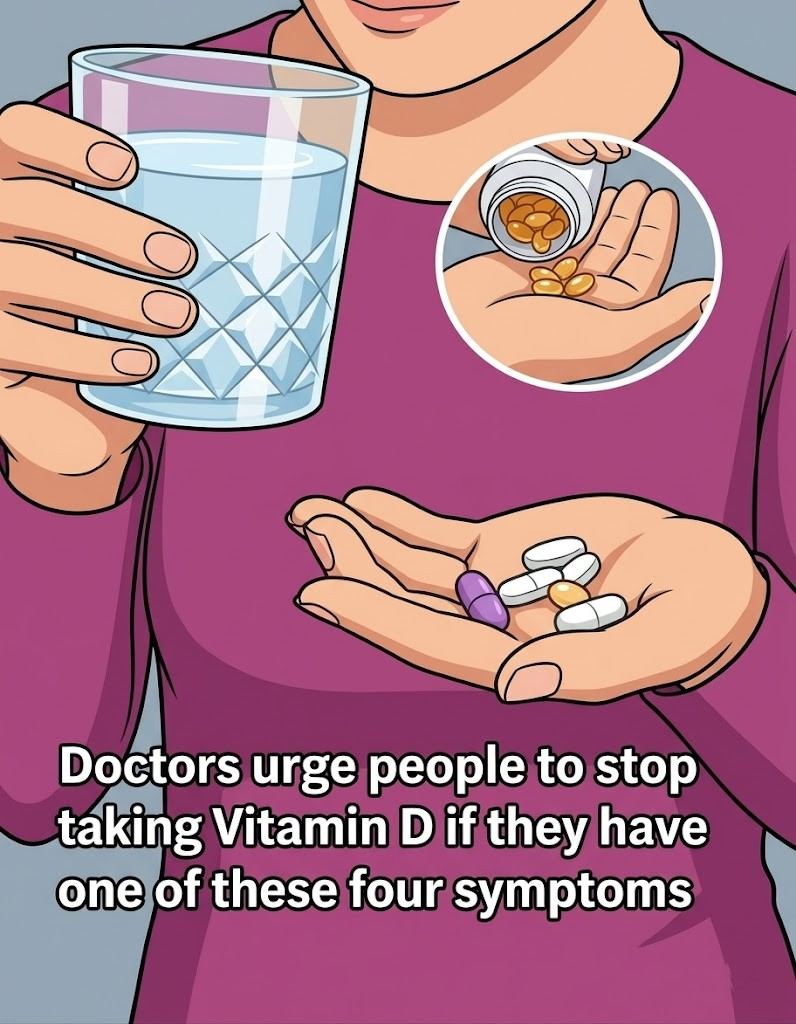
That headline is overly dramatic. Doctors don’t tell everyone to stop Vitamin D—they warn about possible toxicity from high doses, which is uncommon but real.
🧠 When vitamin D can be a problem
Too much vitamin D can raise calcium levels in the blood (called
Hypercalcemia).
This usually happens from high-dose supplements over time, not from sunlight or normal diet.
⚠️ Symptoms that may signal a problem
1. Persistent nausea or vomiting
- Loss of appetite
- Stomach discomfort
2. Excessive thirst and frequent urination
- Body trying to get rid of excess calcium
3. Weakness or fatigue
- Feeling unusually tired or confused
4. Kidney-related issues
- Pain in the side/back
- Possible kidney stones
🚨 Important reality check
- These symptoms are not specific to vitamin D—they can have many causes
- You should not stop supplements blindly without checking why
⚠️ Who is at higher risk
- People taking high-dose supplements (well above recommended levels)
- Those with kidney problems
- People combining multiple supplements
✅ What you should actually do
- If you have symptoms → see a doctor and get tested
- Check your dosage (many people take more than needed)
- Don’t exceed recommended limits unless prescribed
🧠 Bottom line
Vitamin D is beneficial—but excessive doses can cause problems over time. The key is proper dosing, not fear-based stopping.
If you want, tell me your dose and how long you’ve been taking it—I can help you judge if it’s safe.
