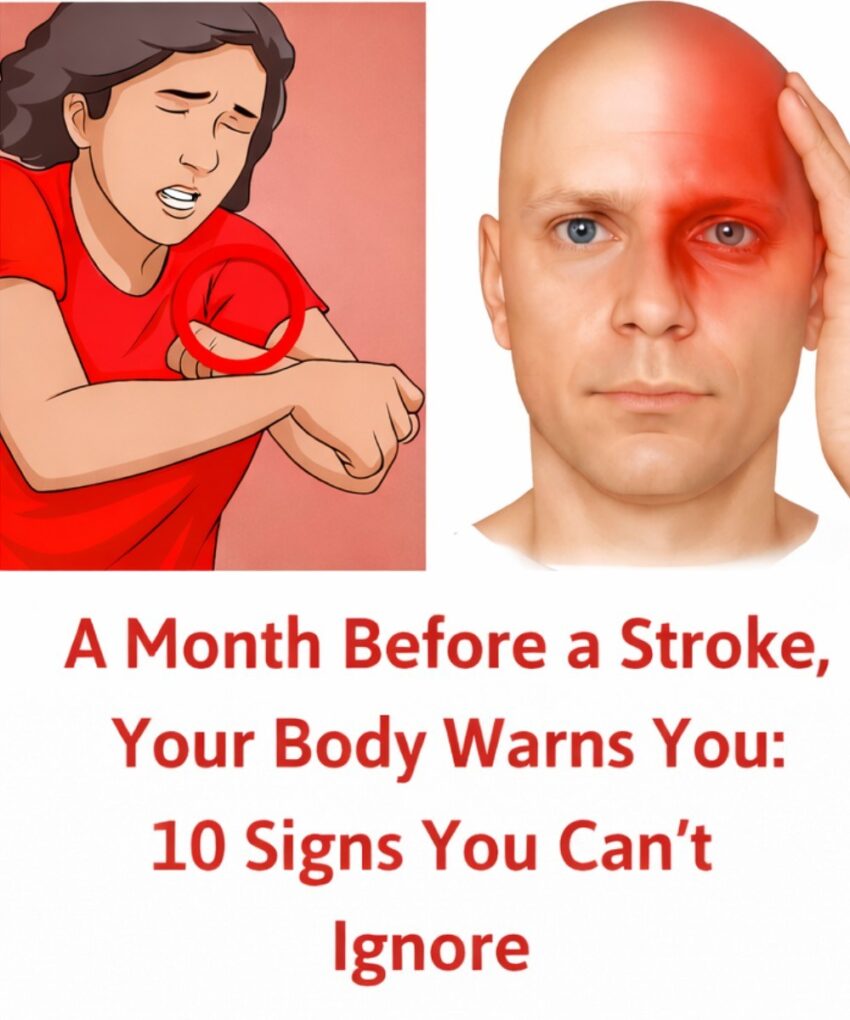
That headline is misleading. The body doesn’t reliably give a clear “one-month warning” before a stroke. Many strokes happen suddenly.
However, there are warning signs—especially brief episodes called a Transient ischemic attack (TIA)—that can occur days or weeks beforehand.
Here’s what actually matters 👇
🚨 Urgent warning signs (can happen anytime)
These are medical emergencies, not early hints:
- Sudden weakness or numbness (face, arm, or leg—often one side)
- Trouble speaking or understanding
- Sudden vision problems
- Loss of balance or coordination
- Severe, unusual headache
👉 Use the FAST stroke test:
- Face drooping
- Arm weakness
- Speech difficulty
- Time to call for help immediately
⚠️ Possible earlier warning episodes (often TIAs)
Some people experience short, temporary symptoms that go away:
- Brief numbness or weakness
- Short episodes of confusion or slurred speech
- Temporary vision loss (like a curtain over one eye)
- Sudden dizziness
👉 These may last minutes to hours—but still require urgent evaluation
🧠 Important reality check
- There’s no guaranteed “10 signs one month before” list
- The highest stroke risk is in the days after a TIA, not a fixed timeline
- Some people have no warning at all
🧩 Major risk factors (often silent)
- High blood pressure (biggest risk)
- Diabetes
- High cholesterol
- Smoking
- Heart rhythm problems like Atrial fibrillation
✔️ Bottom line
Don’t rely on viral countdown lists. If you notice sudden neurological symptoms—even if they pass—treat it as urgent. Acting fast can prevent a full stroke.
If you want, I can show you how to reduce your stroke risk step by step, especially based on your age.
