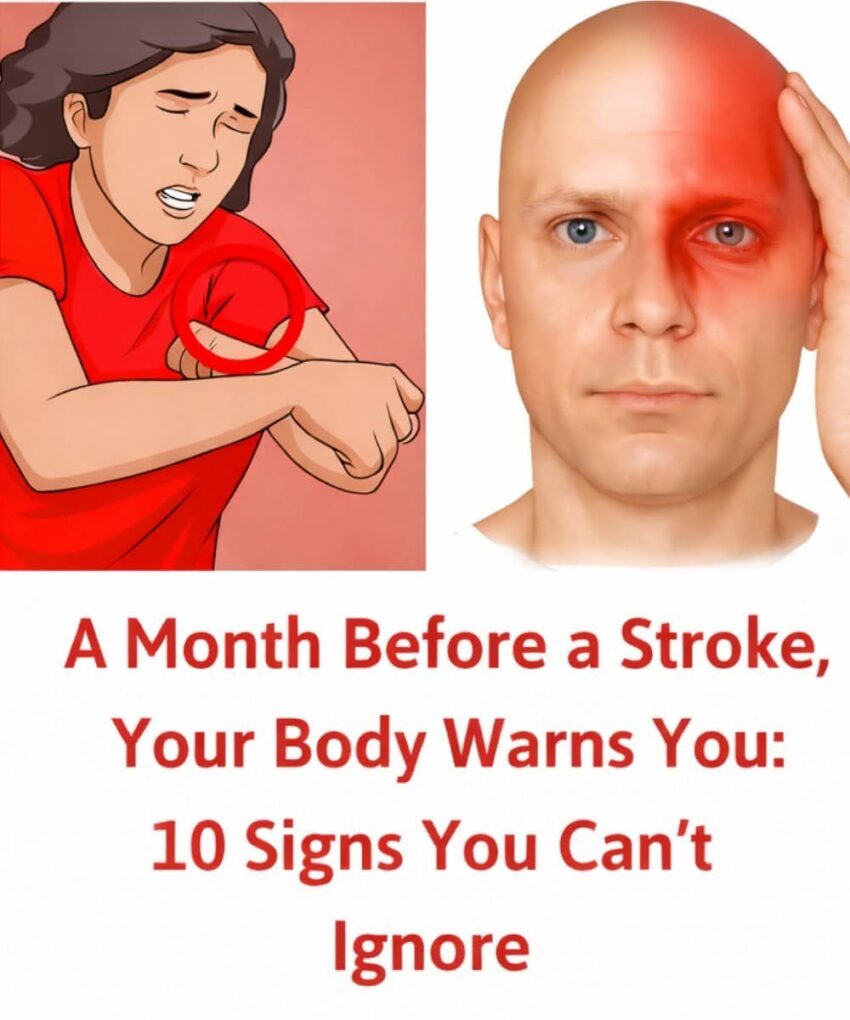
That claim is misleading. The body doesn’t reliably give a clear set of warnings “a month before” a Stroke. Many strokes happen suddenly.
What can happen—and is important—is a short-term warning event:
⚠️ The real early warning
Transient ischemic attack (TIA)
- Temporary blockage of blood flow to the brain
- Symptoms look like a stroke but go away within minutes to hours
- Can occur days or weeks before a major stroke
👉 This is a medical emergency, even if symptoms disappear.
🚨 Symptoms you should never ignore (even briefly)
- Face drooping on one side
- Arm or leg weakness/numbness
- Speech difficulty or slurred speech
- Sudden vision problems
- Severe headache (especially if unusual)
- Dizziness or loss of balance
👉 Use the FAST rule: Face, Arm, Speech, Time to act.
❌ About those “1-month warning signs”
Lists online may include:
- Fatigue
- Headaches
- Poor sleep
These are common and nonspecific—they don’t reliably predict a stroke.
🛡️ What actually lowers your risk
- Control blood pressure
- Manage diabetes
- Don’t smoke
- Stay active
- Eat a balanced diet
- Take prescribed medications (if any)
🧾 Bottom line
There’s no dependable “one-month warning list.” The only real early signal is a mini-stroke (TIA), and the most important thing is recognizing sudden symptoms and acting immediately.
If you want, I can help you check your personal stroke risk factors and what to watch for in your case.
