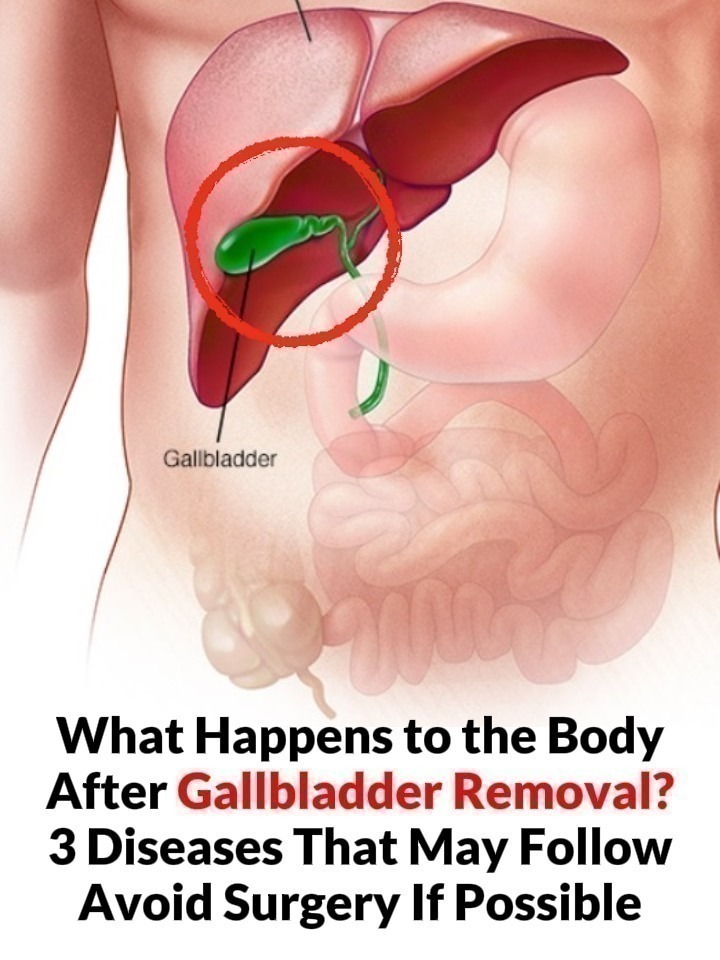
That headline is tilted to scare you. Cholecystectomy is one of the most common operations worldwide, and for many people with symptomatic gallstones it prevents serious complications. “Avoid it when possible” ignores cases where delaying surgery is actually risky.
Here’s the balanced, evidence-based view.
🧠 What changes after gallbladder removal
- The liver still makes bile
- Instead of being stored, bile flows continuously into the intestine
- Most people adapt within weeks and digest food normally
⚠️ Conditions that can occur (but aren’t guaranteed)
1) Postcholecystectomy syndrome
- Symptoms: abdominal pain, bloating, indigestion
- Often mild and manageable; sometimes related to other GI issues rather than the surgery itself
2) Bile acid diarrhea
- Occurs in a minority of patients
- Usually treatable with diet or medications
3) Metabolic changes (small risk)
Some studies note slight increases in:
- Fatty liver
- Cholesterol changes
👉 These are influenced more by diet, weight, and activity than the surgery alone.
❗ What the headline leaves out
The risks of not having surgery when needed
Untreated gallbladder disease can lead to:
- Cholecystitis
- Acute pancreatitis
- Blocked bile ducts (can become life-threatening)
In those cases, surgery isn’t optional—it’s protective.
🧾 When surgery is usually recommended
Doctors consider removal when you have:
- Recurrent painful gallstones
- Infection or inflammation
- Complications affecting the pancreas or bile ducts
🥗 Life after surgery (what helps)
- Eat smaller, balanced meals at first
- Limit very fatty foods initially
- Gradually return to a normal diet
- Stay active and maintain a healthy weight
✅ Bottom line
- The “3 conditions” are possible but not common or inevitable
- Most people live normal, healthy lives after surgery
- Avoiding surgery when it’s medically needed can be more dangerous than the surgery itself
If you want, I can help you figure out whether gallbladder symptoms typically require surgery or can be managed without it—that’s where the real decision lies.
