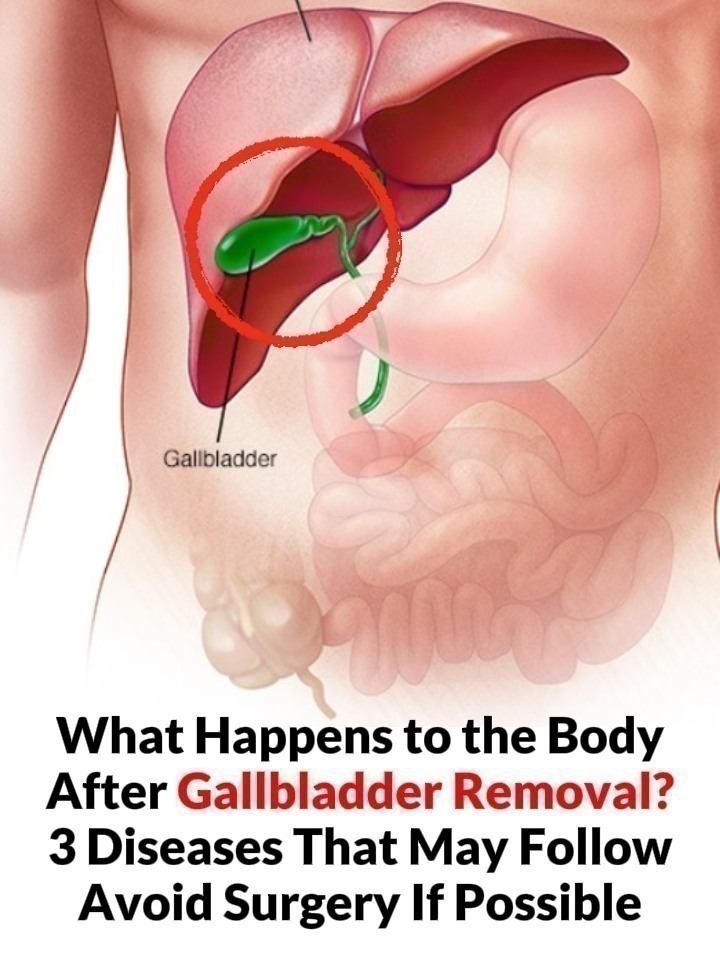
That headline is misleading. Surgery to remove the gallbladder—called a Cholecystectomy—is commonly done because the benefits outweigh the risks (for example, repeated gallstone attacks or complications). It’s not something to “avoid at all costs.”
What’s true is that some people notice digestive changes afterward. Here’s the realistic picture:
🧠 Why symptoms can happen
The gallbladder stores bile. After removal, bile flows continuously into the intestine instead of being released in bursts with meals—this can affect fat digestion in some people.
⚠️ Possible conditions after surgery
1) Bile acid diarrhea
- Frequent, loose stools—especially after fatty meals
- Usually temporary and manageable
2) Post-cholecystectomy symptoms
- Bloating, gas, mild indigestion
- Sometimes called post-cholecystectomy syndrome
3) Fat digestion sensitivity
- Trouble tolerating high-fat foods
- Leads to discomfort or urgency after eating
❗ Important reality check
- Most people recover well and live normally
- Serious long-term problems are not common
- Many people feel better after surgery because gallstone pain stops
🧠 When surgery is actually necessary
Doctors recommend it for:
- Recurrent gallstones causing pain
- Infection or inflammation
- Blocked bile ducts
👉 Avoiding surgery in these cases can be more dangerous than having it
✅ How to manage after surgery
- Start with smaller, lower-fat meals
- Gradually reintroduce foods
- Stay active
- Seek treatment if diarrhea persists
🚩 When to see a doctor after surgery
- Persistent diarrhea
- Severe abdominal pain
- Weight loss or malnutrition
✅ Bottom line
👉 Gallbladder removal is generally safe and often necessary
👉 Some digestive changes can occur—but are usually manageable
👉 The viral claim exaggerates risk and ignores the benefits
If you want, I can help you decide whether surgery is typically recommended in specific gallbladder conditions.
