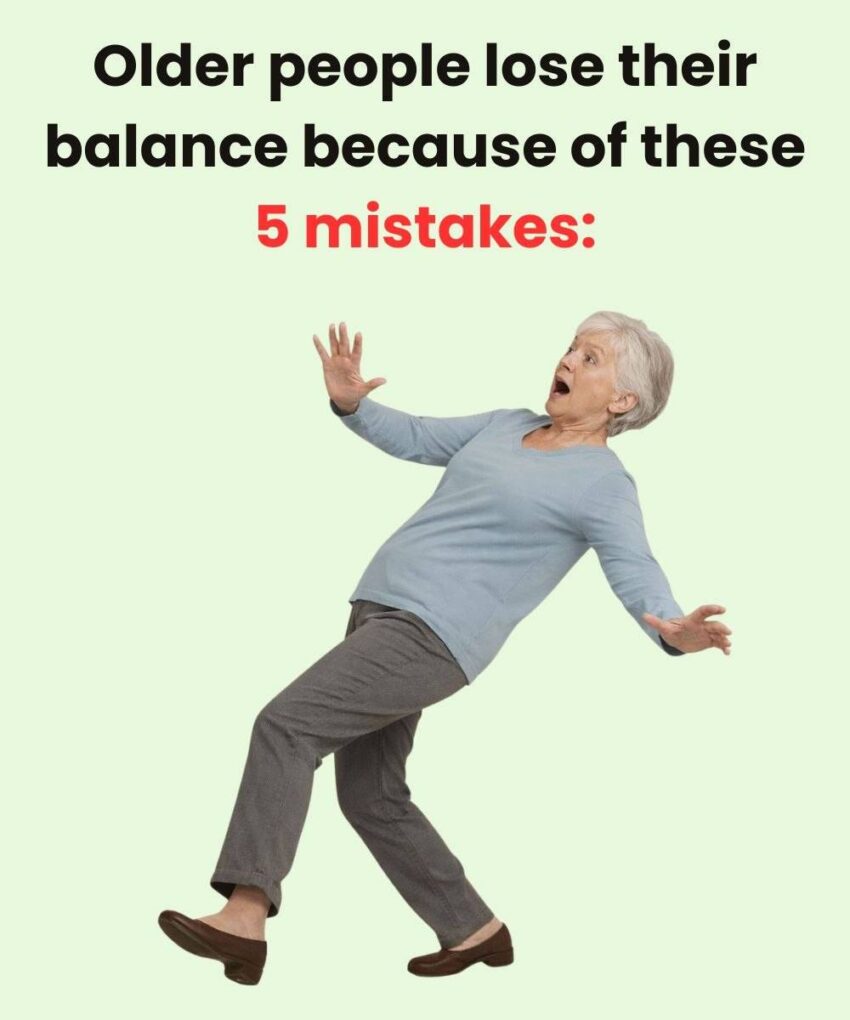
Balance problems in older adults are very common—but often they’re made worse by everyday habits that can be corrected. Avoiding these mistakes can significantly reduce the risk of falls and improve confidence.
⚠️ Common Mistakes That Affect Balance in Older Adults
👟 1. Wearing the Wrong Footwear
- Loose slippers or worn-out shoes
- Lack of grip or support
👉 Increases risk of slipping and instability
🪑 2. Sitting Too Much
- Long periods of inactivity weaken muscles
👉 Leads to reduced stability and slower reactions
🧘 3. Avoiding Exercise
- Skipping balance or strength exercises
👉 Can worsen conditions like Sarcopenia
💊 4. Ignoring Medication Side Effects
- Some medicines cause dizziness or drowsiness
👉 Increases fall risk if not monitored
👁️ 5. Not Checking Vision Regularly
- Poor eyesight affects depth perception
👉 Makes walking and navigating unsafe
🧂 6. Poor Hydration or Nutrition
- Dehydration can cause dizziness
- Low nutrients weaken muscles
🏠 7. Unsafe Home Environment
- Clutter, loose rugs, poor lighting
👉 Common causes of falls at home
🚶 8. Rushing Movements
- Standing up too quickly
👉 Can cause sudden drops in blood pressure (lightheadedness)
🦵 9. Ignoring Foot or Joint Problems
- Pain or stiffness affects walking pattern
👉 May be linked to conditions like Arthritis
😴 10. Poor Sleep
- Fatigue affects coordination and reaction time
✅ What Helps Instead
- Wear supportive, non-slip shoes
- Do simple balance exercises daily
- Keep living spaces safe and well-lit
- Stay hydrated and eat balanced meals
- Review medications with a doctor
✔️ Bottom Line
Many balance issues are preventable. Small changes in daily habits can make a big difference in maintaining independence and safety.
If you want, I can give you a 2-minute daily balance routine that’s very effective for older adults.
