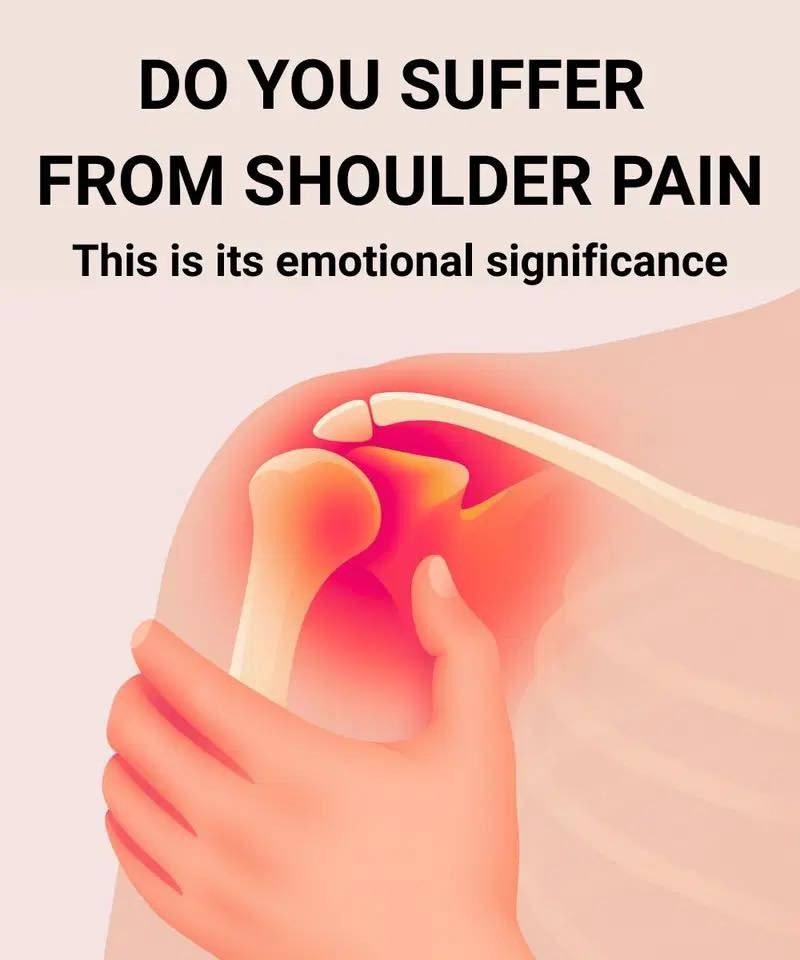
The idea that shoulder pain has a specific emotional meaning is popular online—but it’s often oversimplified. Let’s break it down in a balanced way so you know what’s real and what’s not.
🦴 First: the physical side matters most
Shoulder pain is commonly caused by real medical issues like:
- Rotator cuff injury
- Frozen shoulder
- Tendinitis
- Poor posture or overuse
These should always be considered first, especially if pain is persistent.
🧠 The emotional connection (what people mean)
That said, your body and mind are connected. Stress and emotions can contribute to muscle tension—especially in the neck and shoulders.
People often associate shoulder discomfort with:
1. “Carrying too much responsibility”
The phrase “weight on your shoulders” isn’t just poetic. Chronic stress can cause tightening in upper back and shoulder muscles.
2. Suppressed stress or anxiety
Conditions like Anxiety disorder can lead to:
- Muscle tension
- Tight shoulders
- Reduced mobility
3. Emotional overload or burnout
When you’re mentally overwhelmed, your body may respond with physical symptoms—especially stiffness and aches.
⚠️ Important reality check
- Emotions can contribute to pain, but they rarely are the only cause
- Ignoring physical injury and blaming emotions can delay proper treatment
- Not all pain has a “hidden meaning”
✅ What actually helps
A combined approach works best:
For the body:
- Gentle stretching and mobility work
- Improving posture
- Strengthening exercises
- Rest if overused
For the mind:
- Stress management (breathing, walks, breaks)
- Better sleep
- Talking through ongoing stress
🧩 Bottom line
Shoulder pain doesn’t secretly “mean” one specific emotion—but stress, tension, and mental load can absolutely make it worse.
If you want, I can help you figure out whether your shoulder pain is more likely physical, stress-related, or both based on your symptoms.
