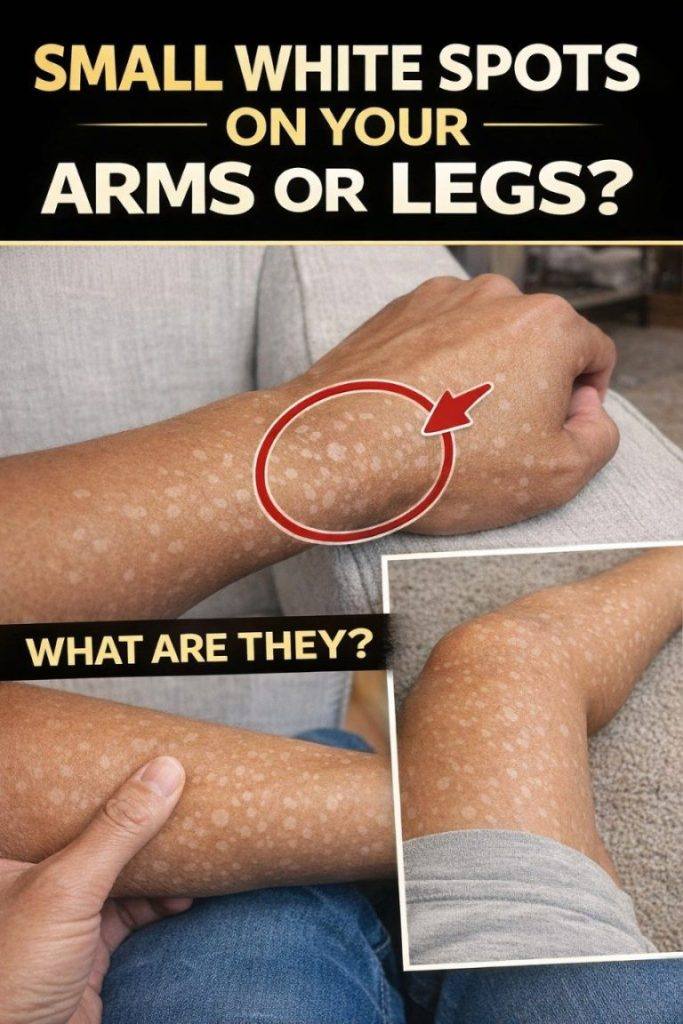
That headline is designed to sound mysterious, but the “truth” is usually much less dramatic. Tiny white spots on arms and legs are common and, in most cases, harmless. The key is figuring out which type they are.
Here are the most likely explanations:
🟢 1. Idiopathic guttate hypomelanosis (IGH)
Idiopathic guttate hypomelanosis
- Small, round white spots—often on arms and legs
- More common as people age or with sun exposure
- Completely benign (not dangerous, not contagious)
👉 This is the most common cause in adults.
🟡 2. Tinea versicolor (fungal infection)
Tinea versicolor
- Light or white patches, sometimes slightly scaly
- May itch mildly
- Caused by yeast on the skin
👉 Treatable with antifungal creams or shampoos.
⚪ 3. Vitiligo (less common but important)
Vitiligo
- Sharply defined white patches
- Happens when pigment cells are lost
- Not harmful physically, but long-term condition
👉 Worth medical evaluation if patches are spreading.
🟠 4. Dry skin or minor irritation
- Can make skin look patchy or lighter
- Usually improves with moisturizing
🔍 How to tell the difference (quick clues)
- Tiny, flat, no itching, long-term → likely IGH
- Slight scaling or itching → possible fungal issue
- Spreading, sharply defined patches → check for vitiligo
⚠️ When to see a doctor
- Spots are rapidly spreading
- They itch, peel, or change shape
- You’re unsure what they are
🧾 Bottom line
Most of these “tiny white spots” are harmless and cosmetic, not a hidden disease. The viral posts exaggerate them to create worry.
If you want, you can describe how the spots look (size, itching, how long you’ve had them), and I’ll help you narrow it down more accurately.
