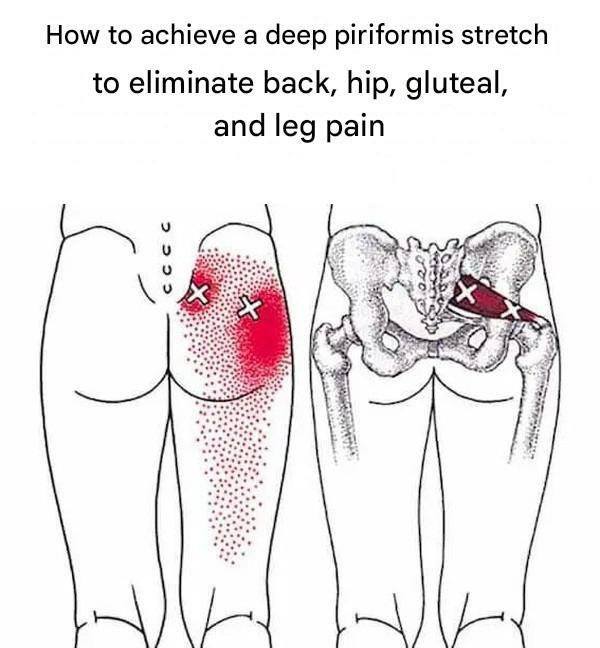
A “deep piriformis stretch” can help—but it won’t magically eliminate all pain. It’s useful when tightness or irritation of the Piriformis muscle contributes to symptoms (sometimes called Piriformis syndrome).
Here’s how to do it safely and effectively:
🧘♂️ 1. Lying Figure-4 Stretch (best starting point)
How:
- Lie on your back
- Cross one ankle over the opposite knee (make a “4” shape)
- Pull the bottom thigh toward your chest
- Keep your back flat
Hold: 20–30 seconds, repeat 2–3 times each side
👉 You should feel a stretch in the glute/hip, not sharp pain
🪑 2. Seated Piriformis Stretch
How:
- Sit upright in a chair
- Cross one ankle over the opposite knee
- Gently lean forward with a straight back
Hold: 20–30 seconds
🧍 3. Standing Stretch
How:
- Place one ankle over the opposite knee (like sitting, but standing)
- Sit back slightly (as if into a squat)
- Hold onto something for balance
⚠️ Common mistakes
- Rounding your back instead of hinging at the hips
- Pulling too hard → causes pain instead of stretch
- Holding your breath
🚩 When to be careful
- Sharp, shooting pain down the leg (possible Sciatica)
- Numbness or weakness
- Pain that worsens with stretching
👉 In these cases, get medical advice before continuing
🧠 What actually helps long-term
- Stretching + strengthening (glutes and core)
- Regular movement (avoid long sitting periods)
- Good posture
✅ Bottom line
A deep piriformis stretch can relieve tightness, but lasting relief comes from consistent, balanced movement—not one stretch alone.
If you want, I can give you a short daily routine (5–10 minutes) that targets hip and lower back pain more effectively.
