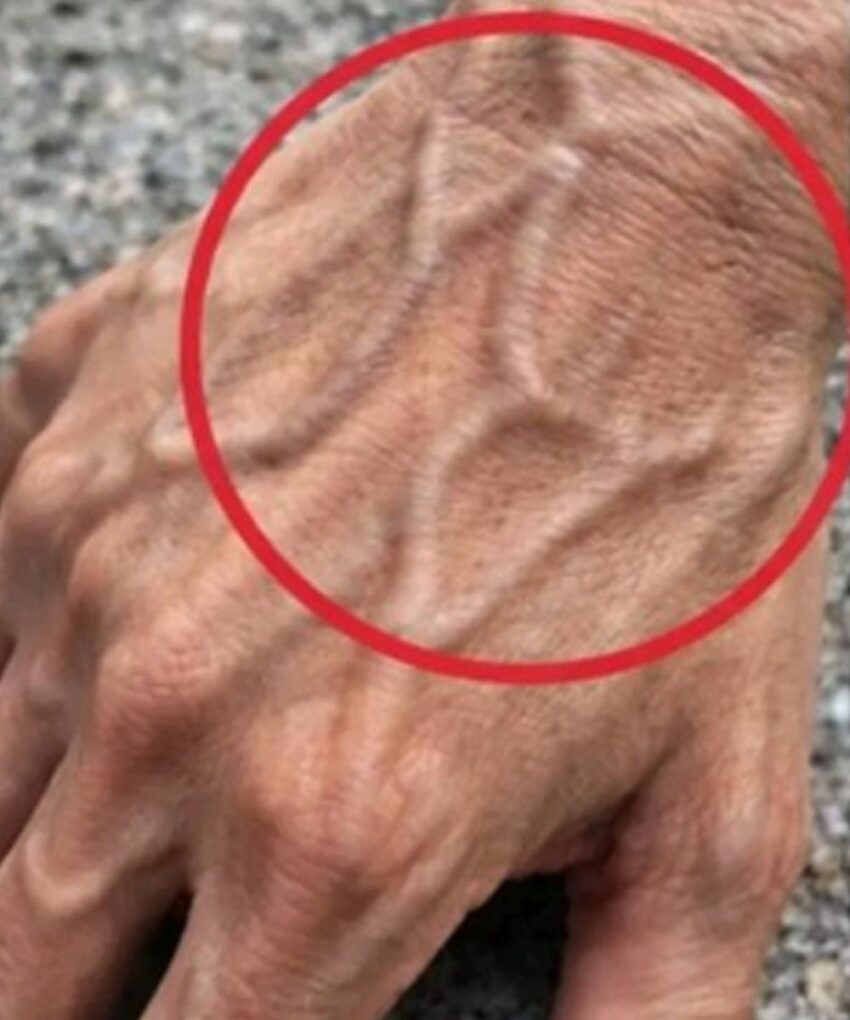
That sentence is another over-simplified claim. Visible veins don’t point to one single condition—they can happen for several normal reasons, and only sometimes relate to health issues.
🩸 What visible veins usually mean
1. Low body fat (very common)
When there’s less fat under the skin, veins show more easily—especially in:
- arms
- hands
- legs
This is common in lean or athletic people.
2. Aging skin
As we get older:
- skin becomes thinner
- elasticity decreases
So veins appear more prominent—this is normal.
3. Heat or exercise
In hot weather or after activity:
- veins expand (vasodilation)
- blood flow increases
This makes them temporarily more visible.
4. Genetics
Some people naturally have:
- lighter or thinner skin
- more visible vein patterns
No health issue involved.
5. Muscle development
More muscle can push veins closer to the surface, making them stand out.
⚠️ When visible veins may signal a problem
1. Varicose veins
Varicose veins
- Bulging, twisted appearance
- Pain, heaviness, or swelling
2. Circulation issues
- Persistent swelling
- Skin discoloration
- Aching or discomfort
3. Sudden unexplained changes
- Veins becoming very prominent quickly
- Pain, redness, or warmth (possible clot → urgent)
🧠 Bottom line
Visible veins usually mean normal body differences like low fat, aging, or temperature—not a disease.
Only worry if they are:
- painful
- swollen
- rapidly changing
- or affecting daily comfort
If you want, you can describe what your veins look like (where, color, any pain), and I’ll help you figure out if it’s normal or worth checking.
