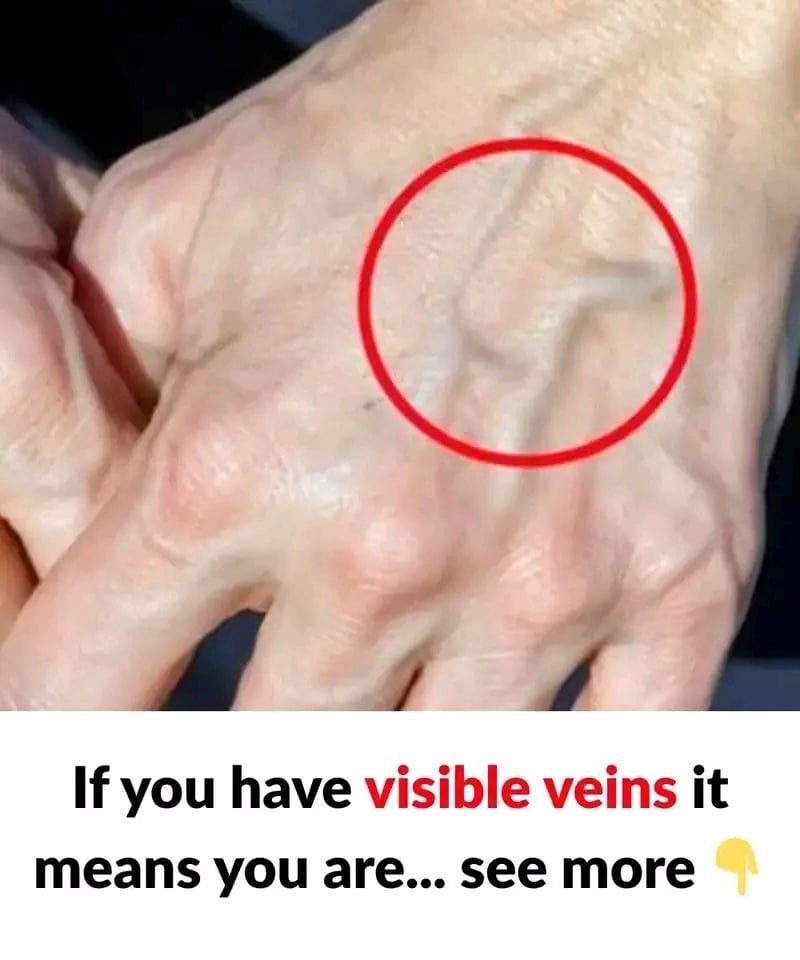
That sentence is another oversimplified (and often misleading) claim.
Visible veins don’t point to one single condition. In most cases, they’re completely normal.
🩸 What visible veins usually mean
1. You have lower body fat
Less fat under the skin makes veins easier to see—common in:
- lean individuals
- physically active people
2. Your skin is thinner (often with age)
As skin thins, veins become more noticeable—this is a normal part of aging.
3. You’re warm or recently exercised
Heat or activity causes veins to expand, making them stand out temporarily.
4. Genetics
Some people naturally have:
- lighter or thinner skin
- more visible vein patterns
No health problem involved.
5. Muscle development
More muscle can push veins closer to the surface, especially in arms and legs.
⚠️ When visible veins could signal an issue
Varicose veins
- Bulging, rope-like veins
- Pain, heaviness, or swelling
Other warning signs:
- Sudden increase in vein visibility
- Redness, warmth, or pain (possible clot → needs attention)
- Skin discoloration around veins
🧠 Bottom line
Visible veins usually mean normal body traits—not a hidden disease.
Only worry if they are:
- painful
- swollen or bulging
- changing quickly
- affecting comfort or mobility
If you want, you can describe where you’re seeing them (hands, legs, chest, etc.), and I’ll help you figure out if it’s completely normal or worth checking.
