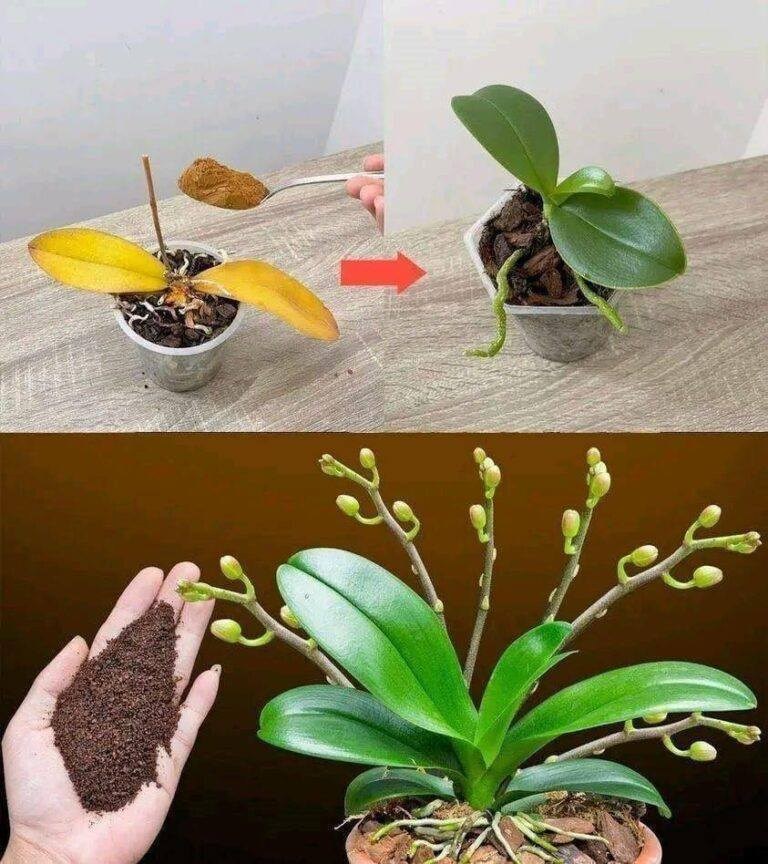
That claim sounds appealing—but it’s not how orchids work. There’s no teaspoon of any ingredient that can suddenly trigger blooming.
Most home orchids are Phalaenopsis orchid, and they bloom based on environmental cues, not quick “boosts.”
🌸 What actually makes an orchid bloom
☀️ 1. Enough light (the #1 factor)
- Bright, indirect light is essential
- Too little light = healthy leaves but no flowers
🌡️ 2. Cooler nights trigger spikes
- A drop of about 5–10°C at night helps initiate flowering
- This mimics natural seasonal changes
💧 3. Proper watering
- Water when roots turn silvery
- Constantly wet roots → rot → no blooms
🌿 4. Light feeding (not hacks)
- Use diluted orchid fertilizer every few weeks
- Supports steady growth and future blooms
🧪 What those “teaspoon tricks” usually are
They often suggest things like:
- Sugar water
- Baking soda
- Milk or rice water
👉 These can:
- Attract pests
- Cause mold
- Damage roots if overused
And they don’t reliably trigger flowering.
🧠 Why people think it worked
If an orchid blooms after a “trick,” it’s usually because:
- It was already about to bloom
- The timing made it look like the trick caused it
✂️ What you can do instead (simple plan)
- Place near a bright window (no harsh direct sun)
- Give slightly cooler nights for a couple of weeks
- Feed lightly and consistently
- Be patient—flower spikes take time
🧠 Bottom line
There’s no miracle teaspoon—orchid blooms come from the right conditions over time, not instant fixes.
If you want, tell me what your orchid looks like (roots, leaves, last bloom), and I’ll help you get it to flower again.
