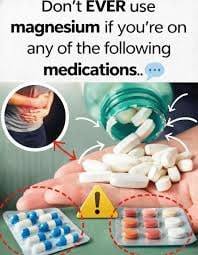
That headline is too extreme. You don’t need to “never use magnesium”—but you do need to be careful with certain medications because magnesium can interfere with how they work.
Here’s the real, practical guidance 👇
🧠 Why magnesium can be an issue
Magnesium (from supplements or high doses) can:
- Bind to some drugs in the gut
- Reduce how well they’re absorbed
👉 This doesn’t mean “never”—it often means separate the timing
⚠️ Medications that need caution
💊 1. Certain antibiotics
- Especially tetracyclines and fluoroquinolones
👉 Magnesium can block absorption
Fix: Take them 2–4 hours apart
💊 2. Levothyroxine
- Used for Hypothyroidism
👉 Magnesium reduces its effectiveness
Fix: Take magnesium at least 4 hours later
💊 3. Bisphosphonates
- Used for Osteoporosis
👉 Absorption is very sensitive
Fix: Take on an empty stomach, keep magnesium separate
💊 4. Diuretics (water pills)
- Can affect magnesium levels in the body
👉 May increase or decrease magnesium
💊 5. Heart medications
- Some drugs affecting heart rhythm can interact with magnesium levels
🚨 When to be extra careful
- Kidney problems (magnesium can build up)
- Taking multiple medications
- High-dose magnesium supplements
✔️ What most people can do safely
- Get magnesium from food (nuts, seeds, leafy greens)
- If using supplements:
- Take them at a different time from medications
- Stick to recommended doses
❌ What the headline gets wrong
- ❌ “NEVER use magnesium” → false
- ❌ Most interactions are manageable, not dangerous
- ❌ Timing matters more than avoidance
✔️ Bottom line
Magnesium is generally safe—but with some medications, you need proper timing or medical advice, not total avoidance.
If you tell me what medications you’re taking, I can check exactly how magnesium would interact in your case 👍
