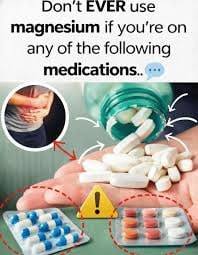
That headline is too absolute. Magnesium isn’t something you must “never use” with certain medicines—but it can interact, so timing and supervision matter.
Here’s a clear, practical guide 👇
⚠️ Medications that can interact with magnesium
1. Certain antibiotics
Examples include Ciprofloxacin and Doxycycline
- Magnesium binds to these drugs in the gut
- 👉 This reduces absorption, making the antibiotic less effective
Fix: Take magnesium 2–4 hours apart
2. Thyroid medication
Levothyroxine
- Magnesium can block absorption
- 👉 May reduce treatment effectiveness
Fix: Separate doses by at least 4 hours
3. Diuretics (water pills)
- Some increase magnesium loss
- Others may raise levels
👉 Effects vary—monitoring may be needed
4. Heart medications
Certain drugs for heart rhythm or blood pressure can interact with magnesium levels, especially in people with heart disease.
5. Osteoporosis medications
Example: Alendronate
- Magnesium can reduce absorption
Fix: Take at a different time of day
🚨 When to be more cautious
- Kidney problems (magnesium can build up)
- High-dose supplements (more likely to cause issues)
- Taking multiple medications
✅ What most people should do
- Don’t panic—magnesium is generally safe
- Avoid taking it at the same time as certain meds
- Stick to recommended doses
- Ask a doctor if you’re unsure
🧠 Bottom line
Magnesium isn’t “forbidden” with these medications—it just needs proper timing and awareness to avoid reducing effectiveness or causing side effects.
If you tell me which medication you’re taking, I can give you exact timing and safe dosage advice tailored to you.
