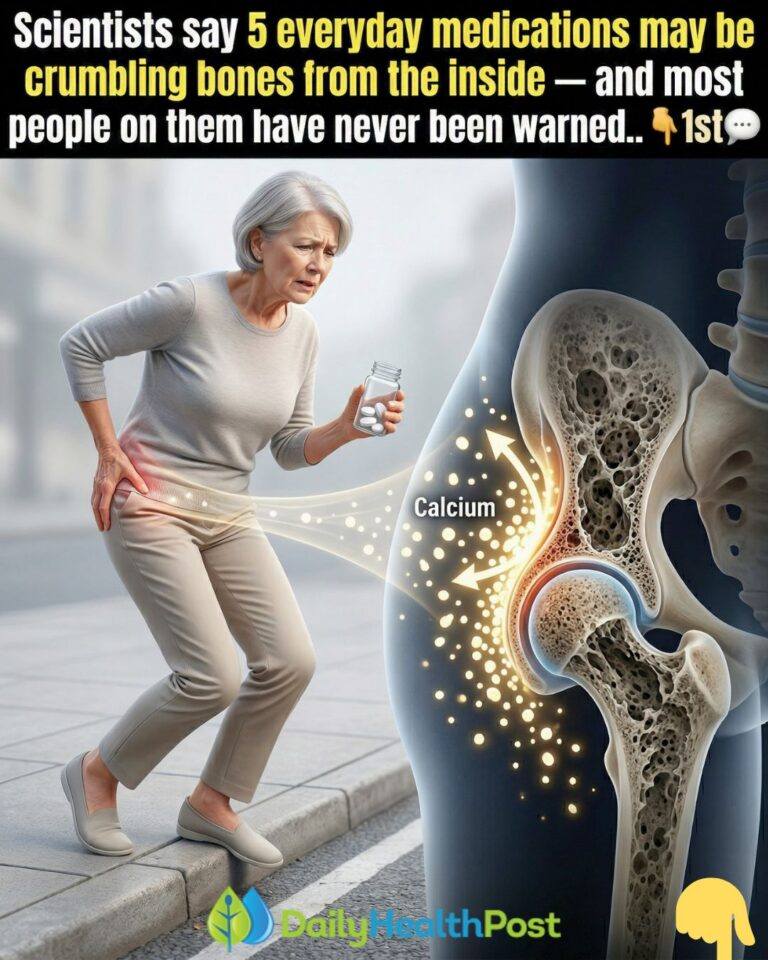
That headline is based on some real medical concerns—but exaggerated to sound alarming.
Yes, a few commonly used medications can affect bone density over time, but they don’t secretly “crumble bones,” and doctors are generally aware of these risks.
🧠 The real picture
Some medications can:
- Reduce calcium absorption
- Interfere with vitamin D
- Increase bone breakdown
👉 But this usually happens gradually, with long-term use, and in higher-risk people.
⚠️ 5 common medication groups linked to bone loss
1. Corticosteroids (strongest evidence)
- Used for asthma, arthritis, autoimmune diseases
- Can reduce calcium absorption and bone formation
- One of the leading causes of medication-related osteoporosis (Verywell Health)
2. Acid reflux drugs (PPIs)
- Long-term use may reduce calcium absorption
- Associated with slightly higher fracture risk
3. Antidepressants (SSRIs)
- Linked to lower bone density and higher fracture risk
- Possibly due to effects on calcium and vitamin D (Verywell Health)
4. Diabetes medications (e.g., pioglitazone)
- Can reduce bone mineral density, especially with long-term use (Verywell Health)
5. Diuretics (“water pills”)
- May cause loss of calcium and minerals through urine (Verywell Health)
🆕 Newer concern (still being studied)
Some newer weight-loss/diabetes drugs (GLP-1 types) have been linked to a slightly increased risk of osteoporosis, possibly due to rapid weight loss and nutrient changes—but the overall risk is small and not fully proven (Verywell Health)
❌ What the viral claim gets wrong
- It suggests doctors are “hiding” risks → not true
- It ignores that risks depend on:
- Dose
- Duration
- Age and nutrition
- It makes it sound inevitable, which it isn’t
🛡️ What actually protects your bones
If you take any of these medications:
- Get enough calcium and vitamin D
- Do weight-bearing exercise (walking, strength training)
- Avoid smoking and excess alcohol
- Ask your doctor about bone density testing if long-term use
🧾 Bottom line
Some medications can affect bone health—but:
- The risk is known and monitored
- It’s usually manageable
- The benefits of these drugs often far outweigh the risks
If you tell me which medication you’re taking, I can give you a clear, personalized risk breakdown instead of generic headlines.
