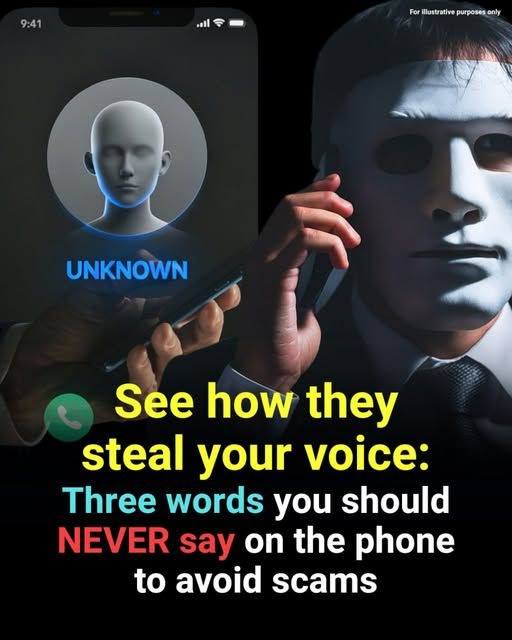
That headline is overhyped. There isn’t a fixed set of “three words” that will let scammers steal your voice and empty your accounts.
What’s real is that scammers sometimes use Voice phishing and may record your voice. In rare cases, they can use snippets to attempt **Voice cloning—but this usually requires more data and context, not just one or two words.
🧠 The “three words” myth
You may see claims like:
- “Never say ‘yes’”
- “Never say your name”
👉 In reality:
- A simple “yes” recording alone is not enough to authorize payments or contracts
- Modern systems don’t rely on a single recorded word for verification
⚠️ What scammers actually try to do
- Get you to confirm personal information
- Trick you into sharing codes, passwords, or banking details
- Pressure you into acting quickly (“urgent problem,” “account blocked”)
🛑 Real ways to protect yourself
✔️ Be cautious with unknown callers
- Don’t share personal or financial info
✔️ Verify identity
- Hang up and call the official number of the company
✔️ Avoid engaging with suspicious questions
- You can say: “I don’t give information over the phone”
✔️ Use call-blocking or spam filters
🚩 Red flags of scams
- Urgency (“act now or lose access”)
- Requests for OTPs or codes
- Requests for payment or sensitive info
🧠 Bottom line
There’s no magical “three words” to avoid. The real risk is giving away information or being pressured into action, not simply speaking.
If you want, I can show you common scam scripts used in your region so you can recognize them instantly.
