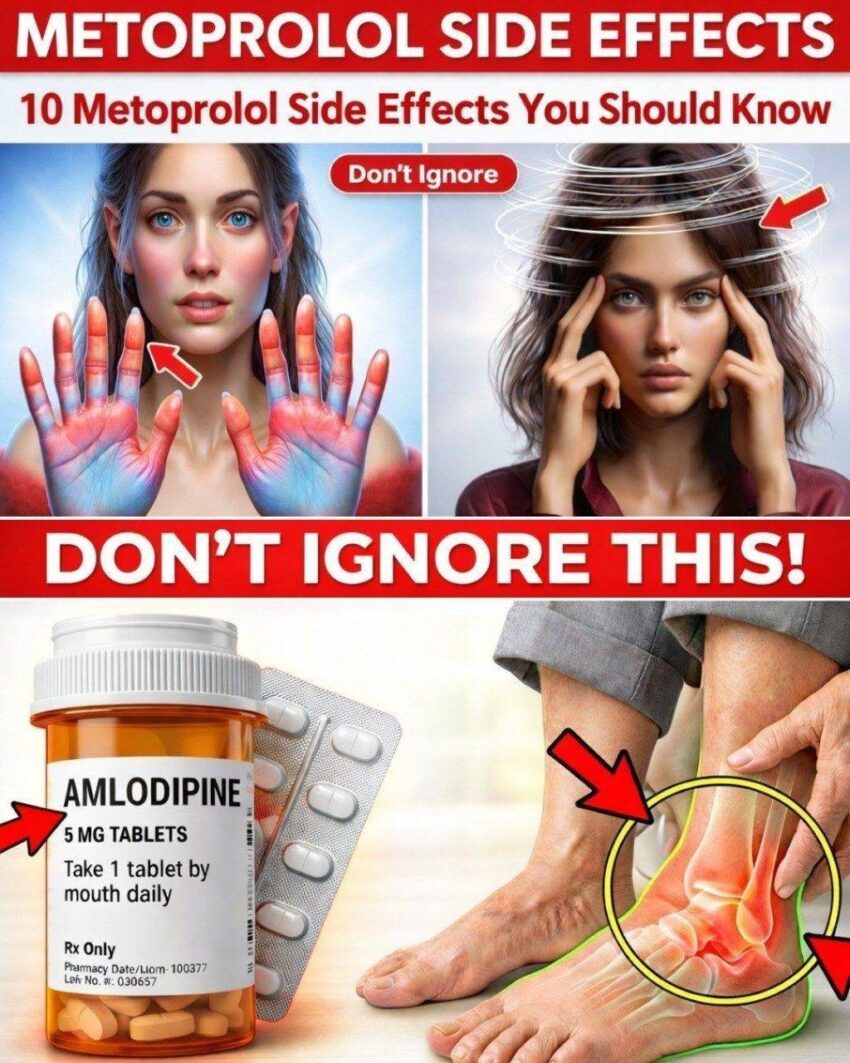
That headline is designed to scare you. Doctors aren’t “praying you don’t discover” anything about Metoprolol—its side effects are well known and routinely discussed. What matters is knowing what’s common, what’s rare, and when to act.
⚠️ Side effects people sometimes don’t expect
😴 1. Fatigue / low energy
Common early on; often improves after a few weeks.
🥶 2. Cold hands and feet
Due to reduced blood flow to extremities.
😵 3. Dizziness or lightheadedness
Especially when standing up (lower blood pressure).
❤️ 4. Slow heart rate (bradycardia)
Can cause weakness or fainting if it drops too low.
🛌 5. Sleep problems
Insomnia or vivid dreams in some people.
😔 6. Mood changes
Low mood or reduced motivation (less common).
🫁 7. Shortness of breath
More likely if you have asthma/COPD—needs medical review.
🍽️ 8. Stomach upset
Nausea, diarrhea, or general discomfort.
⚖️ 9. Mild weight gain
Can occur gradually.
🩸 10. Masks low blood sugar symptoms
Important if you have Type 2 Diabetes—you may not feel a fast heartbeat during a low.
🚫 What the headline gets wrong
- ❌ Nothing is “hidden”—these are documented in prescribing info
- ❌ Implies the drug is unsafe—misleading
- ❌ Uses fear instead of balanced information
✅ Reality check
Metoprolol is widely used because it:
- Lowers blood pressure
- Controls heart rhythm
- Protects the heart after cardiac events
For many people, benefits outweigh side effects.
⚠️ When to contact your doctor
- Fainting or near-fainting
- Very slow pulse with symptoms
- Worsening shortness of breath
- Severe fatigue that doesn’t improve
Never stop it suddenly—that can stress the heart.
🧾 Bottom line
There are side effects, but they’re not secrets. With the right dose and monitoring, Metoprolol is generally safe and effective.
If you want, tell me your dose and any symptoms—you’ll get a more tailored take on what’s normal vs. worth checking.
