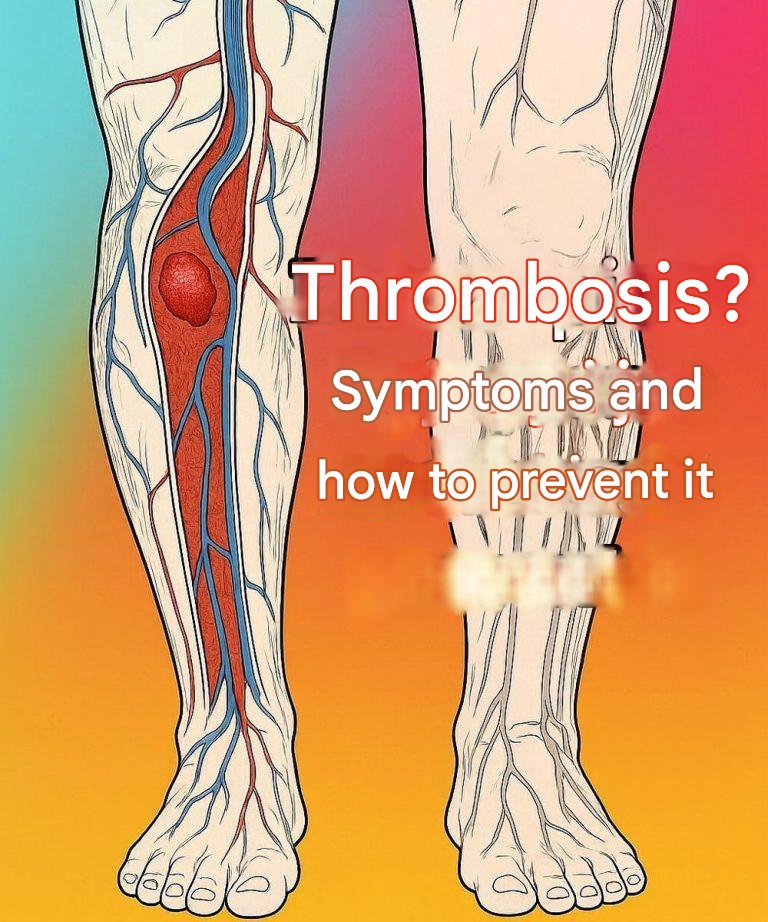
🩸 What is thrombosis?
Thrombosis is when a blood clot forms inside a blood vessel and blocks normal blood flow. It can happen in veins or arteries.
Two common types:
- Deep vein thrombosis (DVT): clot in deep veins (usually legs)
- Arterial thrombosis: clot in arteries, which can lead to heart attack or stroke
⚠️ Why it’s serious
If a clot breaks loose and travels to the lungs, it can cause a life-threatening condition called
Pulmonary embolism.
🔍 Symptoms to watch for
🦵 DVT (leg clot)
- Swelling in one leg
- Pain or tenderness (often in calf)
- Warmth and redness
🫁 Pulmonary embolism (emergency)
- Sudden shortness of breath
- Chest pain (worse when breathing)
- Rapid heart rate
- Cough (sometimes with blood)
👉 These symptoms need urgent medical care.
🧠 Who is at higher risk?
- Long periods of sitting (travel, desk jobs)
- Recent surgery or injury
- Smoking
- Obesity
- Pregnancy
- Certain medications (like some hormone therapies)
- Family history of clots
🌿 “Natural” prevention (what actually works)
These are real, evidence-based habits—not miracle cures:
🚶 Move regularly
- Avoid sitting for long periods
- Walk or stretch every 1–2 hours (especially during travel)
💧 Stay hydrated
- Dehydration can thicken blood slightly
🥗 Eat a heart-healthy diet
- Include fruits, vegetables, whole grains
- Foods like Garlic and Fish support circulation—but effects are mild
⚖️ Maintain a healthy weight
- Reduces pressure on veins
🚭 Avoid smoking
- Smoking damages blood vessels and increases clot risk
❌ What “natural prevention” does NOT mean
- No food or drink can replace medical blood thinners
- You cannot “dissolve” a dangerous clot at home
- Viral remedies claiming instant blood thinning are misleading
🩺 When medical prevention is needed
Doctors may prescribe medications like:
- Warfarin
- Heparin
These are essential for people at high risk or after a clot.
🧾 Bottom line
Thrombosis is a serious but preventable condition in many cases. Healthy habits help reduce risk, but they’re not a substitute for medical care when needed.
If you want, tell me your situation (long travel, symptoms, medications), and I can help you assess your personal risk more precisely.
