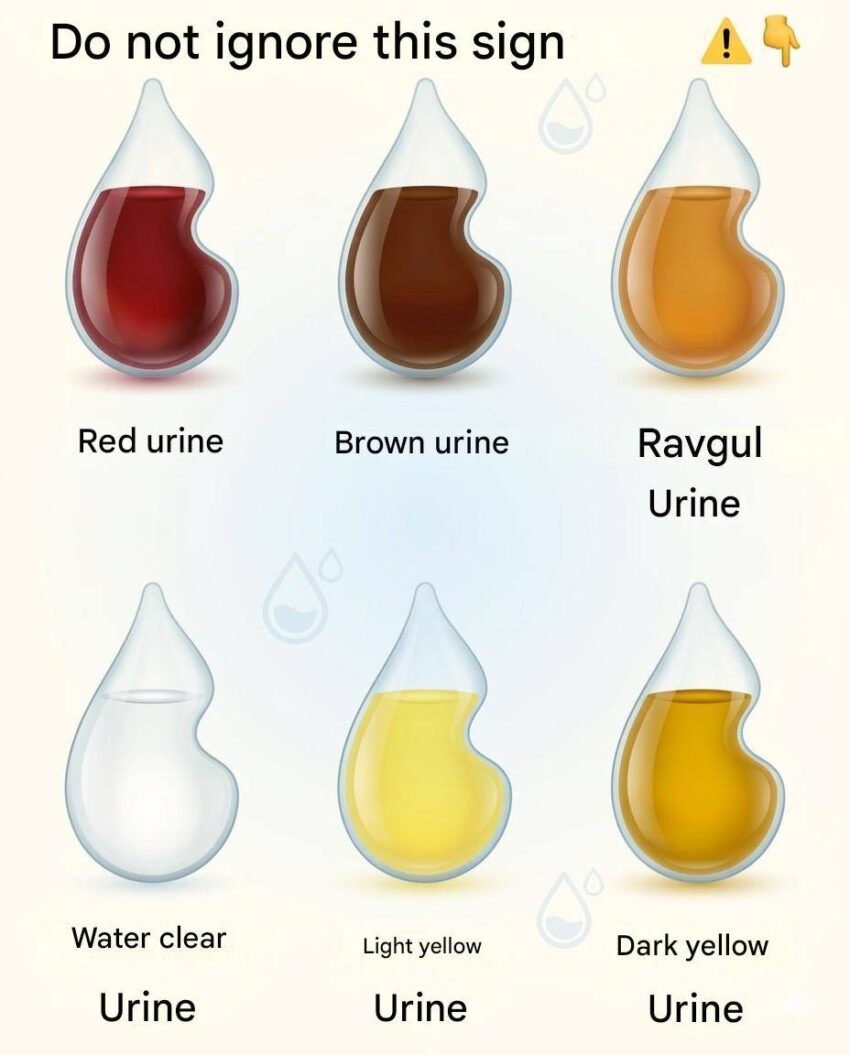
Urine color can give useful clues about hydration and sometimes health—but it’s not a diagnosis by itself. Look for patterns and any symptoms that come with it.
💧 Pale yellow (ideal)
- Light straw color = well hydrated
- Usually a sign things are balanced
🚰 Very clear
- You may be drinking more water than needed
- Usually harmless unless constant
🟡 Dark yellow
- Common sign of dehydration
- Often seen first thing in the morning
🟠 Orange
- Can be from dehydration, vitamins, or medicines
- Occasionally linked to liver/bile issues if persistent
🔴 Pink or red
- Sometimes from foods (beetroot, berries)
- Could also be blood → possible Urinary tract infection, stones, or other causes
👉 Should be checked if it happens without a clear food reason
🟤 Brown or tea-colored
- May indicate severe dehydration or liver-related problems
- Can also occur after intense muscle breakdown
👉 Needs medical attention
🟢 Blue or green (rare)
- Usually due to food dyes or medications
- Occasionally linked to infections
🫧 Foamy or bubbly urine
- Can happen occasionally from fast urination
- Persistent foam may suggest protein in urine → possible kidney issue like Chronic kidney disease
🚨 When to see a doctor
- Red, brown, or very dark urine (not explained by food)
- Persistent foam
- Pain, burning, or strong odor
- Ongoing unusual color changes
🧠 Reality check
- Diet, supplements, and medicines often change urine color
- One unusual episode is usually harmless
- Repeated or persistent changes matter more
✔️ Bottom line
Healthy urine is typically pale yellow. Unusual or lasting color changes—especially red, brown, or foamy—should be checked.
If you want, tell me the exact color you’re seeing and any symptoms, and I’ll help you interpret it more precisely.
