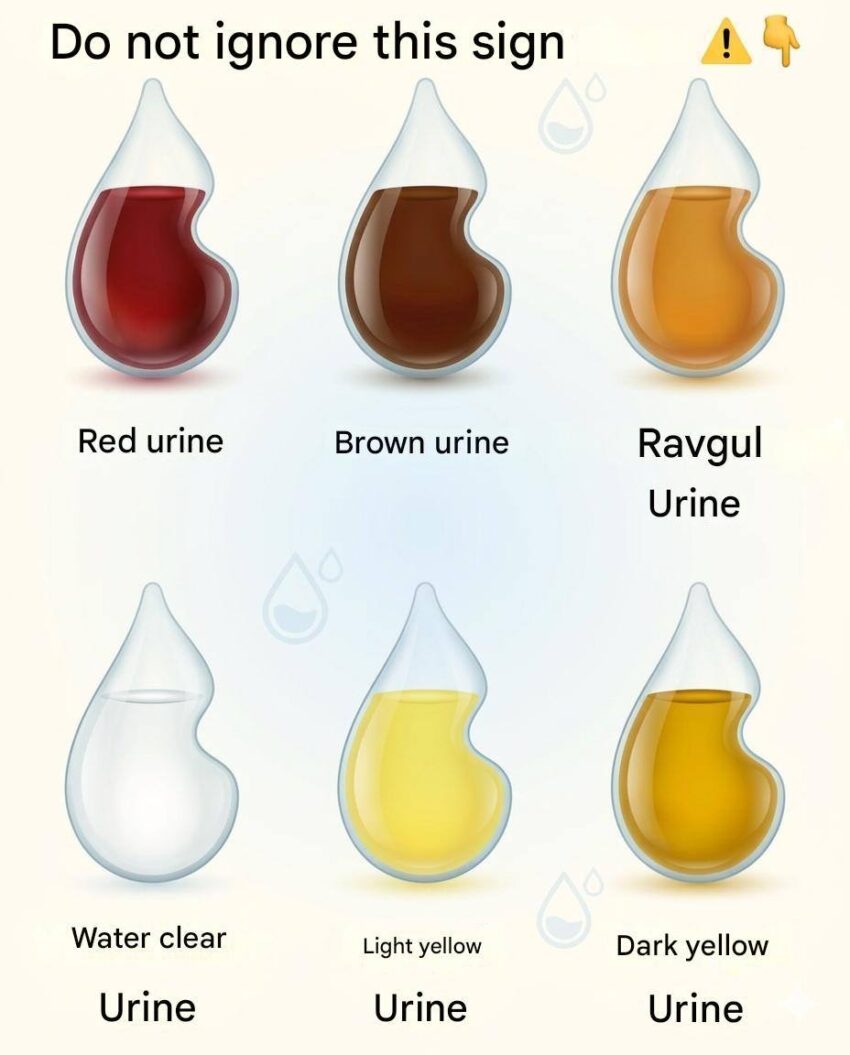
Urine color can be a surprisingly useful snapshot of hydration—and sometimes a clue to underlying health issues. Most changes are harmless, but a few colors are worth paying attention to.
💧 Pale yellow to light straw
What it means: Well hydrated
This is the “ideal” range—your body has enough fluids and your kidneys are doing their job.
🌕 Dark yellow / amber
What it means: Dehydration
You likely need more fluids. Morning urine is often darker because you haven’t had water overnight.
🍊 Orange
Possible causes:
- Dehydration
- Certain medications or vitamins (like high-dose B vitamins)
- Liver or bile issues in some cases
👉 If it persists along with other symptoms (fatigue, yellowing skin), get checked.
🔴 Pink or red
Possible causes:
- Foods like beetroot or berries
- Blood in urine (hematuria), which may signal infection, stones, or something more serious
👉 Persistent red urine should always be evaluated.
🟤 Brown / cola-colored
Possible causes:
- Severe dehydration
- Liver disorders such as hepatitis
- Muscle breakdown in rare cases
👉 This color needs medical attention if unexplained.
☁️ Cloudy or milky
Possible causes:
- Urinary tract infection (urinary tract infection)
- Kidney stones
- Excess minerals or protein
👉 Especially important if you also have pain or burning.
🫧 Foamy urine
Possible causes:
- Fast urination (sometimes harmless)
- Excess protein in urine (proteinuria), possibly linked to kidney disease
👉 Persistent foam should be checked.
🟢 Green or blue (rare)
Possible causes:
- Food dyes
- Certain medications
- Rare infections
🟡 Bright neon yellow
What it means: Excess vitamins (especially B-complex)
Harmless—your body is just flushing out what it doesn’t need.
⚠️ When to take it seriously
See a doctor if you notice:
- Red, brown, or persistently cloudy urine
- Foam that doesn’t go away
- Pain, fever, or burning while urinating
- Swelling, fatigue, or changes in frequency
🟢 Bottom line
Most urine color changes are about hydration and diet, but unusual or persistent colors can be early warning signs of issues with the kidneys, liver, or urinary tract.
If you want, tell me the exact color you’re noticing and any symptoms—you’ll get a more precise interpretation.
