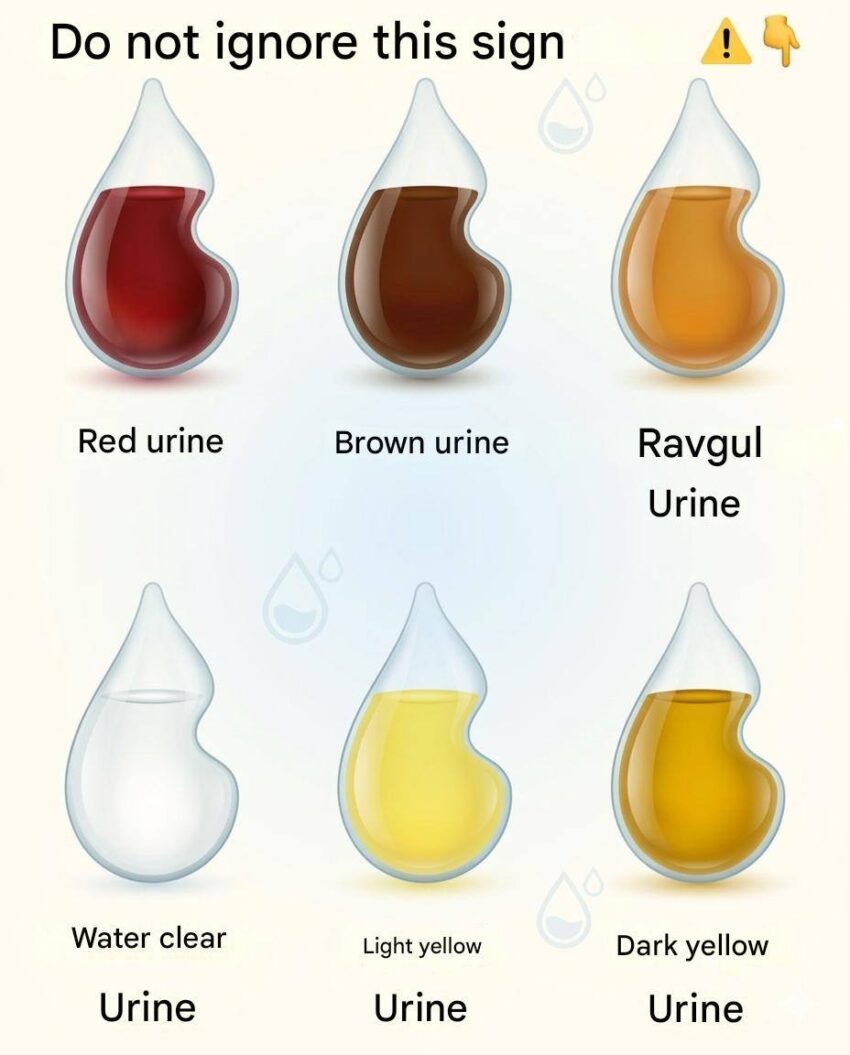
Urine color can tell you quite a bit—mostly about hydration, but sometimes about diet, medications, or health issues. Most changes are harmless, but a few colors are worth paying attention to.
💧 Pale yellow (light straw)
What it means: Well hydrated
This is the ideal range—your body has enough fluids and your kidneys are working normally.
🌕 Dark yellow / amber
What it means: Dehydration
You likely need more water. It’s common first thing in the morning.
🍊 Orange
Possible causes:
- Dehydration
- Vitamins (especially B-complex)
- Liver or bile issues in some cases
👉 If it continues with symptoms like fatigue or yellowing of eyes, get checked.
🔴 Pink or red
Possible causes:
- Foods (beetroot, berries)
- Blood in urine (hematuria)
👉 Could signal infection, stones, or other conditions—needs evaluation if persistent.
🟤 Brown / cola-colored
Possible causes:
- Severe dehydration
- Liver problems like hepatitis
- Muscle breakdown (rare)
👉 This color should not be ignored.
☁️ Cloudy or milky
Possible causes:
- Infection such as urinary tract infection
- Kidney stones
- Excess minerals or protein
🫧 Foamy urine
Possible causes:
- Sometimes harmless (fast flow)
- Persistent foam may mean protein in urine, linked to kidney disease
🟢 Green or blue (rare)
Possible causes:
- Food dyes
- Certain medications
- Rare infections
🟡 Bright neon yellow
What it means: Excess vitamins (especially B vitamins)
Harmless—your body is excreting what it doesn’t need.
⚠️ When to see a doctor
- Red, brown, or persistently cloudy urine
- Ongoing foamy urine
- Pain, burning, or fever
- Swelling or fatigue
🟢 Bottom line
Most urine color changes reflect hydration and diet, but unusual or persistent colors can be early warning signs of issues with the kidneys, liver, or urinary tract.
If you want, tell me the exact color you’re noticing (and any symptoms), and I’ll give you a more precise interpretation.
