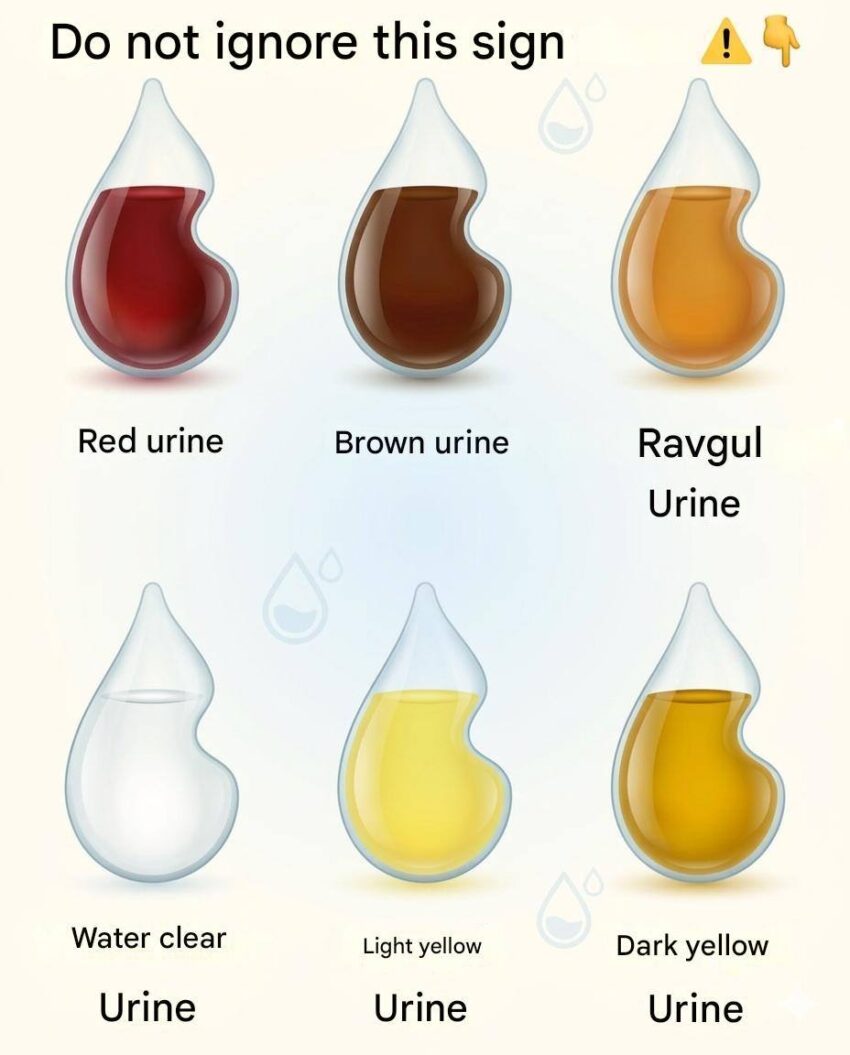
Urine color can give useful clues about hydration and sometimes health—but it’s not a diagnosis on its own. Think of it as a quick signal that something **might** need attention.
—
## 🚻 What different urine colors can mean
### 🟡 Pale yellow (light straw)
* **What it means:** Well hydrated
* **This is the goal** for most people
—
### 💛 Dark yellow
* **What it means:** Mild dehydration
* **Action:** Drink more water
—
### 🟠 Amber / honey
* **What it means:** Dehydration or possibly liver-related issues if persistent
* Could be linked to conditions like liver disease
* **Action:** Hydrate; see a doctor if it continues
—
### ⚪ Clear (almost colorless)
* **What it means:** Overhydration
* Usually harmless, but constant overdoing water isn’t ideal
—
### 🟤 Brown or tea-colored
* **Possible causes:**
* Severe dehydration
* Liver or bile issues
* Muscle breakdown (rare)
* Seen in conditions like hepatitis
* **Action:** Seek medical advice
—
### 🔴 Red or pink
* **Possible causes:**
* Blood in urine
* Certain foods (like beetroot)
* Could be linked to urinary tract infection or kidney issues
* **Action:** Don’t ignore—get checked
—
### 🟢 or 🔵 Green/blue
* **Rare, but possible due to:**
* Medications
* Food dyes
* Certain infections
* **Action:** Monitor; consult if persistent
—
## ⚠️ Important notes
* Foods (beets, carrots), vitamins, and medications can change color temporarily
* One unusual color once isn’t usually serious
* **Persistent changes matter more than one-time changes**
—
## 🚨 When to see a doctor
* Red/pink urine (possible blood)
* Brown urine that doesn’t improve with hydration
* Pain, burning, fever, or strong odor
* Sudden changes that last more than a couple of days
—
## 🧠 Bottom line
* **Light yellow = healthy**
* Darker colors usually mean **drink more water**
* Unusual colors that persist = **get checked**
—
If you want, tell me the exact color you’re noticing, and I can help you narrow down what it most likely means.
