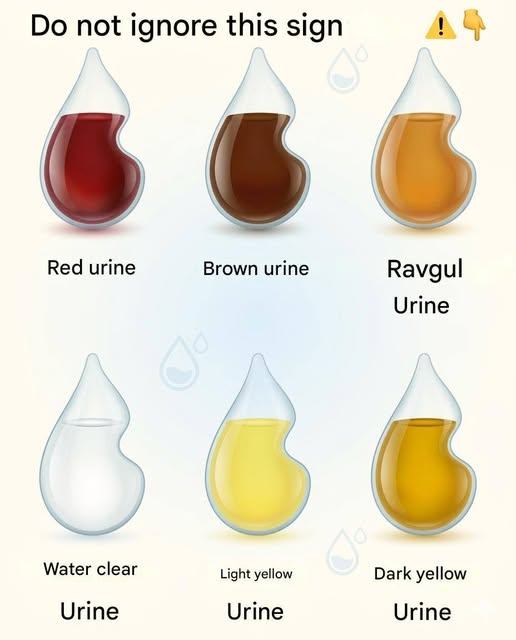
Urine color can give useful clues about hydration and health—but it’s not a diagnosis on its own. Diet, vitamins, and medications can all change the color.
Here’s a simple guide 👇
💧 Pale yellow (straw color)
- Normal and healthy
- Well-hydrated
🟡 Dark yellow
- Mild dehydration
👉 Drink more water
🍯 Amber or honey-colored
- Dehydration is more significant
👉 Increase fluids soon
🚫 Clear (almost colorless)
- You may be overhydrated
- Usually not dangerous, but balance your intake
🟠 Orange
- Could be dehydration
- Sometimes linked to liver or bile issues
- Can also come from certain medications
🔴 Pink or red
- Could be from foods (beetroot, berries)
- Or blood in urine (needs attention)
👉 May relate to conditions like Urinary Tract Infection or kidney issues
🟤 Brown (tea/cola color)
- Possible severe dehydration
- Could indicate liver problems or muscle breakdown
👉 Should be checked
🟢 Blue or green
- Rare
- Often from medications or food dyes
- Sometimes linked to infection
⚠️ When to be concerned
See a doctor if you notice:
- Red or brown urine (without food explanation)
- Persistent dark color
- Pain, burning, or unusual smell
- Foamy urine (possible kidney issue)
🧠 Important note
Urine color can change due to:
- Vitamins (especially B-complex → bright yellow)
- Foods (beets, carrots)
- Medications
✅ Bottom line
Light yellow = ideal. Darker shades usually mean drink more water, while red, brown, or unusual colors should be checked if persistent.
If you want, you can tell me the exact color you’re seeing—I’ll help you interpret it more precisely 👍
