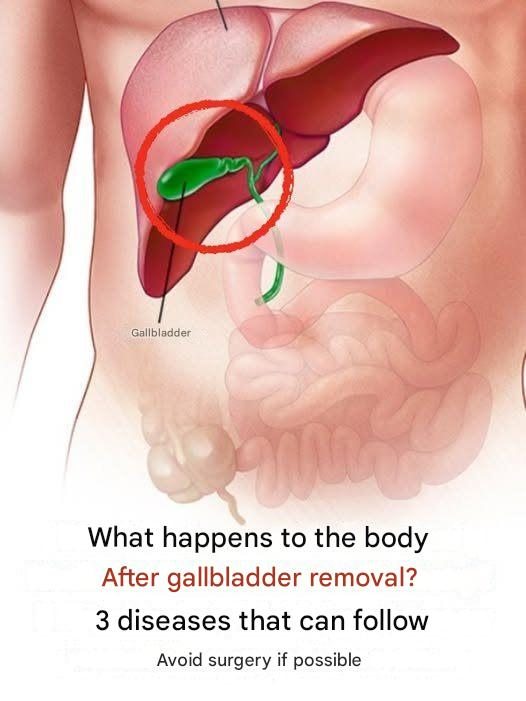
After gallbladder removal (cholecystectomy), most people recover well and live normally. But because bile now flows directly from the liver into the intestine instead of being stored and released in bursts, a few digestive-related complications can occur in some people.
Here are the 3 most commonly discussed possible complications:
1) Post-cholecystectomy diarrhea
- Loose or urgent stools, especially after fatty meals
- Happens because bile flows continuously into the intestine
- Can be temporary (weeks–months) or longer in some people
- Often improves with diet changes or bile-binding medication if needed
2) Bile reflux / gastritis
- Bile flows backward into the stomach
- Can cause burning upper abdominal pain, nausea, or sour taste
- Less common, but can be persistent in some cases
- May require medication to reduce irritation
3) Persistent digestive discomfort (functional symptoms)
- Bloating, gas, indigestion, or food intolerance (especially fatty foods)
- Sometimes overlaps with IBS-like symptoms
- Usually manageable with dietary adjustments over time
Important context
- These are possible, not guaranteed complications
- Most people do not develop serious long-term disease
- Gallbladder removal is typically done when gallstones or inflammation pose a greater health risk than surgery itself
When to seek medical attention
After surgery, contact a doctor if there is:
- Severe or worsening abdominal pain
- Persistent vomiting
- Fever or jaundice
- Uncontrolled diarrhea causing dehydration
Bottom line
Gallbladder removal changes how bile is delivered, which can affect digestion in some people—but for most, the body adapts well and long-term quality of life remains good.
If you want, I can also explain what foods help most after surgery or how long recovery usually takes.
