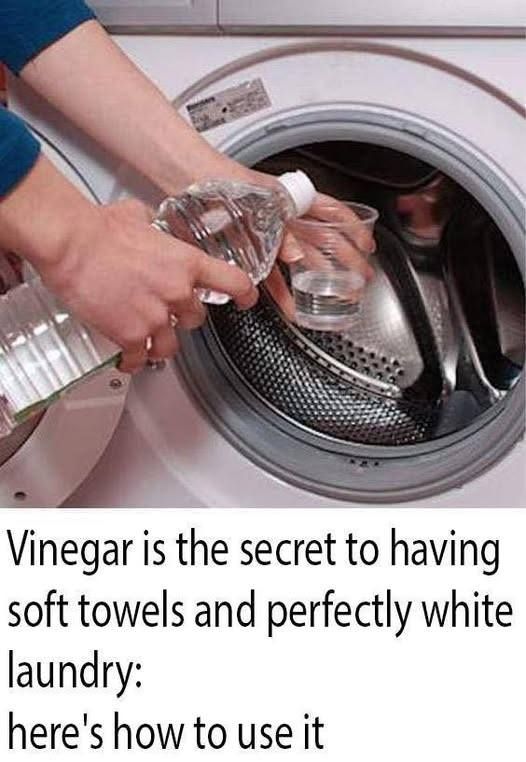
That claim is mostly true—White vinegar can help clean a washing machine—but it’s often used incorrectly or too aggressively.
✅ What vinegar actually does
- Breaks down soap and detergent residue
- Helps dissolve mineral buildup (hard water)
- Reduces musty odors
👉 It’s especially useful if your machine smells or leaves residue on clothes.
🧼 The right way to clean your washing machine
Method (top-load or front-load)
- Make sure the machine is empty
- Add 1–2 cups of white vinegar to the drum
- Run a hot water cycle (longest setting if possible)
For deeper cleaning
- After the vinegar cycle, run a second cycle with:
- ½ cup baking soda (optional, for odor removal)
Don’t forget these areas
- Door seal (front-loaders): wipe with diluted vinegar
- Detergent drawer: soak and scrub
- Filter (if accessible): clean separately
❌ Common mistakes to avoid
- Mixing vinegar with bleach → can create harmful fumes
- Using it too often → may damage rubber seals over time
- Pouring it directly on rubber parts repeatedly
👉 Use vinegar cleaning once a month at most.
⚠️ When vinegar isn’t enough
- Heavy mold buildup may need a specialized cleaner
- Persistent odors could mean trapped debris in the filter or hose
🧾 Bottom line
Vinegar is a simple, effective cleaner for maintenance, not a miracle deep-clean solution. Used occasionally and correctly, it can keep your washing machine fresh and running well.
If you tell me your machine type (front-load or top-load), I can give you a more precise cleaning routine tailored to it.
